




Published June 17, 2026
by Stephen Brayton
• Updated June 17, 2026
The Hidden Cost of Constant Firefighting: How CMMS Creates Peace of Mind for Maintenance Teams
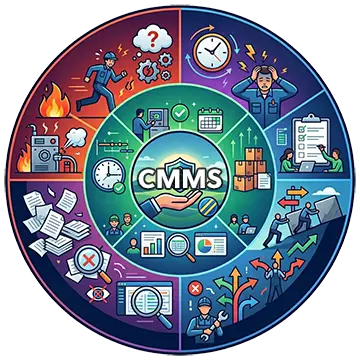 Every maintenance department faces pressure, but not every team experiences the same level of stress. Organizations trapped in reactive maintenance often create an environment where emergencies dictate every shift, every priority, and every decision. When discussing what problems does CMMS software actually solve, many conversations focus on equipment costs and downtime, yet the human impact deserves equal attention. A Computerized Maintenance Management System (CMMS) helps replace daily chaos with structure, visibility, and confidence.
What Problems Does CMMS Software Actually Solve?
Many maintenance leaders first investigate CMMS software because they want fewer breakdowns, lower repair costs, and better asset performance. Those outcomes matter, but they only tell part of the story.
The daily experience of maintenance technicians often reveals deeper challenges. Constant interruptions, emergency repairs, shifting priorities, and incomplete information create stress that accumulates over time. Employees spend their days reacting instead of planning. Small issues become urgent crises. Teams work overtime to catch up on tasks that preventive maintenance could have prevented.
A CMMS addresses these operational and human challenges simultaneously. Through organized work order management, automated preventive maintenance scheduling, asset histories, inventory tracking, and better communication, teams gain control over their workload instead of allowing equipment failures to control them.
Understanding the Reactive vs Preventive Maintenance Culture
The Psychology of Reactive Maintenance
Reactive maintenance culture revolves around urgency. Equipment fails unexpectedly, production stops, and maintenance personnel rush to restore operations.
At first glance, this environment may appear exciting. Solving urgent problems can create a temporary sense of accomplishment. However, sustained exposure to constant emergencies often produces negative consequences.
Technicians frequently experience:
- Unpredictable schedules
- Increased workplace stress
- Overtime fatigue
- Constant interruptions
- Greater risk of human error
- Reduced job satisfaction
When every day feels like an emergency, employees rarely have time to focus on long-term improvements. Teams become trapped in a cycle of responding rather than preventing.
A manufacturing facility offers a common example. If a critical conveyor motor fails several times each month, maintenance personnel repeatedly scramble to repair it. Production managers demand immediate action. Supervisors reshuffle schedules. Technicians postpone preventive tasks to address the latest emergency. The cycle repeats because nobody receives enough time to investigate root causes.
Maintenance software that delivers real value
MAPCON helps maintenance teams stay ahead of work orders, support better decisions, and reduce downtime.
The Psychology of Preventive Maintenance
Preventive maintenance culture creates a different experience.
Maintenance teams know what work requires attention, when tasks should occur, and which assets need inspection. Schedules support planning instead of reacting.
This environment promotes confidence because employees work from clear priorities rather than constant uncertainty.
Preventive maintenance encourages:
- Better workload management
- Improved communication
- More predictable schedules
- Greater focus on long-term asset health
- Lower stress levels
- Stronger employee retention
The difference resembles the contrast between navigating a planned route and driving through a severe storm without a map. One situation creates confidence. The other creates tension.
Why Maintenance Burnout Often Starts with Poor Visibility
Information Gaps Create Frustration
Many maintenance departments still rely on spreadsheets, paper work orders, emails, phone calls, and verbal instructions.
Information becomes scattered across multiple locations. Critical details disappear. Technicians waste valuable time searching for maintenance records, equipment manuals, and previous repair notes.
Every missing piece of information increases frustration.
A CMMS centralizes maintenance data in one location. Technicians can quickly access asset histories, work instructions, parts inventories, and previous repairs. Faster access to information reduces uncertainty and helps employees focus on solving problems rather than hunting for answers.
Constant Interruptions Destroy Productivity
Reactive environments often create a pattern of continuous interruptions.
A technician begins a scheduled repair. A machine breaks down elsewhere. The current task gets postponed. Another emergency appears before the original work resumes.
Repeated disruptions create mental fatigue. Employees struggle to maintain focus, and priorities shift throughout the day.
CMMS work order scheduling benefits include improved task organization and visibility. Maintenance leaders can prioritize work, assign resources appropriately, and reduce unnecessary disruptions. Teams spend less time responding to confusion and more time completing meaningful work.
How CMMS Work Order Scheduling Benefits Maintenance Teams
Clear Priorities Reduce Daily Chaos
One of the most valuable CMMS work order scheduling benefits involves establishing clear priorities.
Without a centralized system, employees often receive conflicting instructions from multiple departments. Production managers want immediate repairs. Supervisors request inspections. Safety teams identify compliance concerns.
A CMMS creates visibility across all maintenance activities. Everyone sees the same information. Work orders follow defined priorities. Resources align with organizational goals.
This clarity removes much of the uncertainty that contributes to workplace stress.
Better Planning Supports Work-Life Balance
Maintenance professionals frequently face unexpected overtime when organizations rely heavily on reactive maintenance.
Equipment failures rarely occur at convenient times. Night shifts, weekends, and holidays often become repair periods.
A CMMS helps maintenance managers schedule preventive work before failures occur. Planned maintenance reduces emergency repairs, allowing employees to spend fewer evenings responding to unexpected breakdowns.
For many organizations, reducing maintenance team burnout begins with creating more predictable schedules.
Accelerate your maintenance results
Pick the next step that fits you best: start your free trial or see MAPCON live with our team.
Industry Example: Food Processing Facilities
Food processing operations depend on strict production schedules and regulatory compliance.
When refrigeration systems, packaging equipment, or conveyors fail unexpectedly, production losses accumulate quickly. Maintenance teams often rush from one emergency to another while attempting to satisfy operational demands.
A CMMS changes this dynamic.
Automated preventive maintenance schedules ensure critical assets receive inspections and service at appropriate intervals. Work orders document completed tasks and create accountability. Asset histories reveal recurring problems before they become major failures.
Instead of constantly reacting to breakdowns, maintenance personnel focus on preventing them.
The result extends beyond equipment reliability. Employees experience less pressure, fewer emergencies, and a more manageable workload.
Industry Example: Healthcare Facilities
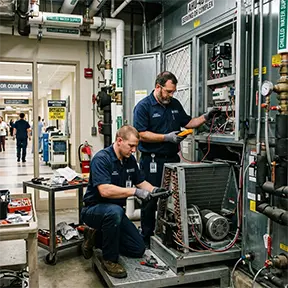 Hospitals and healthcare facilities present unique maintenance challenges.
Technicians support critical systems such as HVAC equipment, generators, medical gas systems, elevators, and environmental controls. Unexpected failures can affect patient care and safety.
Reactive maintenance in healthcare creates enormous pressure because every equipment issue carries significant consequences.
A CMMS provides structured maintenance schedules, inspection records, compliance documentation, and work order tracking. Teams gain confidence that critical assets receive proper attention.
This structured environment reduces uncertainty and allows maintenance professionals to concentrate on high-value activities rather than constant crisis management.
Reducing Maintenance Team Burnout Through Better Processes
Burnout Impacts More Than Productivity
Burnout affects morale, retention, safety, and performance.
Employees experiencing chronic stress often become disengaged. Communication suffers. Mistakes increase. Absenteeism rises. Recruiting replacement technicians becomes more difficult and expensive.
Organizations frequently focus on equipment reliability while overlooking workforce reliability.
A CMMS supports both.
By organizing maintenance activities, automating recurring tasks, and providing visibility into workloads, maintenance software helps create a healthier work environment.
Human Error Often Follows Fatigue
Fatigued employees face greater difficulty maintaining concentration.
When technicians repeatedly work long hours responding to emergencies, mistakes become more likely. Incorrect parts may get installed. Inspections may become rushed. Documentation may remain incomplete.
Preventive maintenance programs supported by a CMMS reduce the volume of emergency situations that contribute to fatigue. Better scheduling allows teams to perform work with greater accuracy and consistency.
Building a Culture of Confidence Instead of Crisis
Technology alone does not create cultural change.
Leadership must support preventive maintenance initiatives and reinforce proactive behaviors. However, CMMS software provides the structure required to sustain those efforts.
Maintenance managers gain visibility into upcoming work. Technicians receive clear assignments. Historical data supports informed decisions. Asset performance trends become easier to identify.
As preventive maintenance activities increase, emergency work decreases. Teams begin experiencing fewer disruptions and greater control over daily operations.
Over time, the organizational mindset shifts.
Employees no longer expect every day to become a crisis. Maintenance planning becomes routine. Communication improves. Workloads become more balanced.
That cultural transformation often delivers benefits that extend far beyond maintenance metrics.
How CMMS Supports Employee Retention
Maintenance labor shortages continue to challenge organizations across many industries.
Experienced technicians possess valuable institutional knowledge. Losing those employees creates operational risk and additional hiring costs.
Workplace culture plays a major role in retention.
Few employees enjoy spending every shift under constant pressure. Organizations that rely exclusively on reactive maintenance often struggle with turnover because stress becomes a permanent feature of the job.
A CMMS helps create an environment where employees can succeed. Clear expectations, organized work orders, preventive schedules, and accessible information reduce daily frustrations.
When maintenance professionals feel supported rather than overwhelmed, retention often improves.
Peace of Mind May Be the Most Overlooked CMMS Benefit
Maintenance software often enters conversations through discussions about equipment reliability, downtime reduction, and maintenance costs. Yet one of its most valuable contributions involves creating a workplace where people can perform their jobs with confidence instead of constant urgency.
Organizations that embrace preventive maintenance create an environment where technicians spend less time chasing emergencies and more time applying their expertise. That shift changes daily experiences, strengthens team morale, and creates a culture where maintenance professionals can focus on meaningful work rather than perpetual crisis response.
FAQs
What is reactive vs preventive maintenance culture?
Reactive maintenance culture focuses on fixing equipment after failures occur, while preventive maintenance culture focuses on scheduled maintenance designed to prevent breakdowns.
How does a CMMS help reduce maintenance team burnout?
A CMMS organizes work orders, schedules preventive maintenance, and reduces emergency repairs, helping create more predictable workloads.
What are the main CMMS work order scheduling benefits?
Work order scheduling improves task prioritization, visibility, communication, and resource allocation across maintenance teams.
Can preventive maintenance improve employee retention?
Yes. More predictable schedules and fewer emergency repairs often reduce workplace stress and improve job satisfaction.
How does MAPCON CMMS support preventive maintenance programs?
MAPCON CMMS helps organizations schedule recurring maintenance tasks, track asset histories, and manage work orders from a centralized system.
Does a CMMS reduce human error in maintenance operations?
A CMMS provides standardized procedures, asset records, and maintenance histories that help technicians perform work more consistently.
MAPCON | 800-922-4336
Try Our CMMS Software Today!
MAPCON CMMS software empowers you to plan and execute PM tasks flawlessly, thanks to its wealth of features and customizable options. Want to see it for yourself? Click the button below to get your FREE 30-day trial of MAPCON!