




Published August 24, 2026
by mapcon
• Updated August 24, 2026
What Happens If Your Facility Stops Using a CMMS?
The Hidden Costs of Abandoning Maintenance Tech
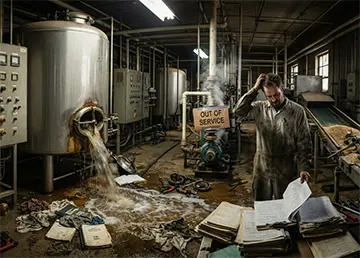 What happens if we stop using a CMMS software platform to manage daily facility operations? Facilities often consider dropping their Computerized Maintenance Management System to trim short-term software subscription expenses.
Protect your facility's long-term operational health and maintain complete visibility across all maintenance workflows with our leading CMMS software solutions.
However, discarding this core platform dismantles your entire maintenance infrastructure and triggers an immediate reliance on institutional memory. Removing a centralized management system shifts operations away from structured asset strategy toward reactive firefighting, creating costly vulnerabilities across every shift.
The Rapid Rise of Maintenance Chaos and Asset Breakdown
Removing a central digital hub creates instant visibility gaps across every department. Work requests shift back to chaotic sticky notes, lost email threads, and verbal requests passed around during shift changes. Technicians lose clear sight of priority assignments, which allows critical repairs to slip through the cracks while low-value tasks consume valuable labor hours.
Without automated work order generation, routine maintenance schedules quickly collapse. Pumps miss their scheduled lubrication intervals, air filtration units clog, and high-wear components run until catastrophic failure. Operating under reactive maintenance drives repair costs up exponentially compared to scheduled upkeep. Unplanned downtime spreads through production lines, stalls output, and wrecks operational budgets.
The absence of centralized historical records leaves technicians blind during complex troubleshooting. When a machine breaks down, workers cannot view past repair logs, recurring failure patterns, or specific component histories. Instead of fixing root causes, teams apply temporary patches over and over. This reactive cycle accelerates asset depreciation and forces organizations into premature capital expenditures for replacement machinery.
The Great "Tribal Knowledge" Brain Drain
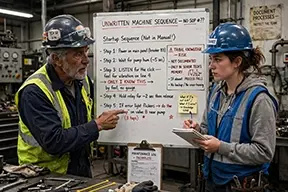 When an organization decides to stop using a CMMS, essential intellectual property begins leaking out the door. Years of maintenance intelligence vanish from the corporate database and settle into the minds of a few senior technicians. The exact sequence required to adjust a custom-built 1990s conveyor, or the precise belt tension for an old HVAC blower, exists only as unwritten memory.
According to benchmark studies from the Plant Engineering Asset Management Report, companies relying on preventive maintenance rather than reactive repairs achieve over 20% higher overall equipment effectiveness (OEE).
Maintenance continuity depends entirely on access to detailed instructions. When your lead technician retires, takes a vacation, or calls out sick, critical repair protocols vanish alongside them. Safety lockout/tagout procedures, non-standard wiring schematics, and unique asset quirks turn into complete mysteries for remaining staff members.
Accelerate your maintenance results
Pick the next step that fits you best: start your free trial or see MAPCON live with our team.
Case Example 1: Wastewater Operations
Consider a municipal wastewater treatment plant operating proprietary sluice gates. A central system stores exact bolt torque values, valve calibration steps, and specific opening sequences for those massive gates. Without that digital asset library, a junior technician trying a manual override might strip an expensive internal drive gear simply because the resident expert took a sick day.
Case Example 2: Pharmaceutical Packaging
In a pharmaceutical packaging facility, specialized high-speed blister packing machines require exact timing adjustments between heating elements and index rollers. A veteran tech knows from experience that the heat block runs two degrees hotter than the digital display indicates. Without capturing that critical note in an asset history file, a replacement technician runs batches at standard readings, ruining thousands of blister packs and shutting down the line.
Losing Control of Inventory and Spare Parts
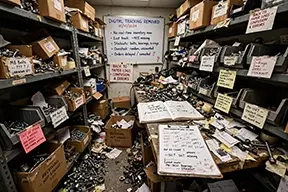 A maintenance platform directly links work orders to spare parts tracking, keeping inventory levels balanced. Eliminating the software breaks this connection and leaves stockrooms managed by guesswork. MRO (Maintenance, Repair, and Operations) inventory transforms into an unorganized room filled with unknown parts, duplicate orders, and obsolete components.
Technicians facing unexpected downtime resort to hoarding critical spare parts in personal lockers or hidden drawers to ensure they can complete future repairs. This practice hides true stock levels from purchasing personnel. The facility then orders duplicate replacements for items sitting on a back shelf, tying up working capital in idle inventory.
Learn how our specialized preventive maintenance implementation services help organizations optimize spare parts management and eliminate stockouts.
Conversely, stockouts of crucial items become common occurrences. A technician pulls the last specialized drive belt for a food processing facility's freezing tunnel on a Friday night without recording the transaction. When that same belt snaps during Monday morning operations, the maintenance crew discovers an empty shelf, forcing extended downtime and emergency shipping fees.
Summary of Operational Impact
| Operational Area | Impact of Abandoning CMMS | Financial & Risk Consequence |
|---|---|---|
| Asset Lifespan | Skipped preventive care and lack of history | Accelerated capital replacement costs |
| Inventory Control | Untracked parts usage and manual stock counts | Excess holding costs and frequent stockouts |
| Labor Efficiency | Time wasted searching for manuals and parts | High overtime pay and lower wrench time |
| Regulatory Audit | Paper logs, missing signatures, incomplete data | Severe compliance fines and operational halts |
Maintenance software that delivers real value
MAPCON helps maintenance teams stay ahead of work orders, support better decisions, and reduce downtime.
Safety Escalations and Compliance Disasters
Safety procedures suffer tremendously when a facility drops its central platform. High-risk activities demand strict compliance with Lockout/Tagout (LOTO) protocols, chemical handling procedures, and personal protective equipment standards. Integrated software embeds these safety requirements directly into work orders, ensuring technicians review critical hazards before opening an electrical panel or entering a confined space.
Without mandatory digital checklists, workers fall back on memory and shortcuts during high-pressure emergency repairs. A technician rushing to fix a leaking chemical pump in a textile dye plant might skip an isolation step because a paper work order lacked specific hazard warnings. This lapse risks hazardous chemical exposure, operator injuries, environmental spills, and severe regulatory fines.
Regulatory audits become nightmare scenarios without digital tracking. Agencies like OSHA, the EPA, or the FDA demand complete, time-stamped proof of maintenance activities. Reconstructing monthly inspection logs from crumpled paper sheets, missing signatures, and scattered logs leads directly to audit failures, heavy penalties, or operational shutdown orders.
Declining Wrench Time and Soaring Overtime Costs
Wrench time—the actual hands-on time technicians spend executing repairs—drops significantly without dedicated maintenance software. When management shifts back to manual methods, workers spend a large portion of their workdays on administrative overhead:
- Searching through filing cabinets for equipment manuals and wiring diagrams
- Walking back and forth across the facility to locate stockroom parts
- Writing out hand-drawn work orders and transcription logs
- Tracking down supervisors to obtain verbal work order approvals
This administrative waste reduces actual repair hours. To complete necessary maintenance tasks under these conditions, management must authorize constant overtime. Labor costs skyrocket while productivity drops, straining team morale and accelerating technician turnover.
Consider a commercial aviation maintenance facility servicing cargo fleets. Mechanics operating with digital tags scan an asset to pull up airframe history, precise torque specs, required parts lists, and digital manuals on a tablet. Without software, that same mechanic spends hours digging through binder shelves in a document room, checking stock boards, and waiting on manual authorizations before turning a single wrench.
Financial Consequences and Budgeting Blind Spots
Dropping software hides asset operating costs behind fragmented expense reports. Facilities management loses the ability to track total cost of ownership (TCO) for individual pieces of machinery. Without clear data showing labor hours, parts costs, and downtime metrics for each machine, executives cannot make informed decisions about whether to repair or replace aging assets.
To evaluate the true financial value of your software investment before making platform changes, read our guide on measuring the real ROI of CMMS implementation.
A commercial laundry enterprise operating dozens of industrial washers provides a clear example. Over three years, one specific unit suffers from chronic frame misalignments that destroy drive bearings every two months. A software system flags this pattern immediately and shows that cumulative repair costs exceed the price of a replacement unit. Without tracking, these repair expenses disperse across separate monthly invoices, causing management to spend thousands maintaining a failing machine.
Budgeting transforms from a precise, data-driven process into wild guesswork. Maintenance managers cannot accurately forecast next year's spare parts expenses, contract labor requirements, or energy utilization profiles. This lack of financial clarity undermines executive trust in the maintenance department.
Navigating the Future of Industrial Facilities
Modern operations demand continuous reliability, rigorous compliance enforcement, and absolute control over asset lifecycles. Facilities that turn away from integrated software platforms trade long-term security for short-term cost cuts.
Choosing to operate without a central maintenance database invites unnecessary risk into every shift. Protecting your operations requires treating maintenance data as a vital corporate resource that demands permanent protection, consistent documentation, and active management.
FAQs
What are the biggest risks of managing facility maintenance manually?
Manual maintenance management leads to missing preventive upkeep, unorganized spare parts inventory, compliance failures, and catastrophic equipment downtime. Removing central tracking forces operations to rely entirely on memory and paper records.
How does a CMMS prevent loss of institutional knowledge when senior technicians leave?
A platform like MAPCON captures detailed repair histories, lockout/tagout steps, and asset specifications into a centralized digital database. This ensures junior technicians can safely execute complex maintenance tasks even when senior staff members are absent.
What happens to inventory costs when software tracking is removed?
Without centralized inventory management, facilities suffer from frequent stockouts of critical spare parts while wasting capital on duplicate items. System tracking maintains proper stock levels and prevents costly emergency freight fees.
Why does downtime increase when organizations drop maintenance management systems?
Without automated work order generation, routine maintenance tasks get overlooked, causing machinery to operate until catastrophic failure. Software like MAPCON ensures timely preventive care, keeping production lines running smoothly.
How do digital maintenance records help with safety and regulatory compliance?
Digital tracking provides time-stamped proof of safety inspections, chemical handling, and lockout procedures for auditors like OSHA and the EPA. Relying on paper logs risks missing documentation, which can result in severe fines or plant closures.
Can maintenance software help facilities decide when to replace aging equipment?
Yes, system records track total labor, parts, and downtime costs for every asset over its operational life. MAPCON gives management clear financial visibility to determine whether repairing or replacing a failing machine is the most cost-effective choice.
MAPCON | 800-922-4336
Try Our CMMS Software Today!
MAPCON CMMS software empowers you to plan and execute PM tasks flawlessly, thanks to its wealth of features and customizable options. Want to see it for yourself? Click the button below to get your FREE 30-day trial of MAPCON!