




Published September 09, 2026
by mapcon
• Updated September 09, 2026
Can CMMS Work for Multiple Facilities? How Centralization Protects Brand Standards
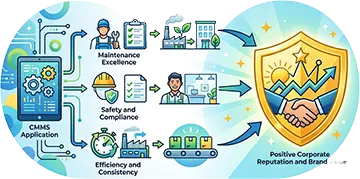 Expanding into multiple facilities creates exciting opportunities, but it also introduces new maintenance challenges that affect customer experiences and operational consistency. Can CMMS work for multiple facilities? The answer reaches beyond software scalability because a centralized CMMS helps protect the standards that customers expect from every location. Companies that rely on consistent service, product quality, and equipment care often discover that maintenance practices shape their brand just as much as marketing campaigns.
Why Brand Consistency Depends on Maintenance
Many organizations focus on logos, employee training, and customer service when discussing brand consistency. Maintenance rarely enters the conversation until inconsistent practices begin creating problems across locations.
Every facility develops habits over time. One maintenance manager might favor local suppliers, while another creates shortcuts during equipment inspections. Different technicians may complete repairs using different methods even though they work for the same organization. These differences slowly reshape the customer experience.
A centralized CMMS creates one digital source of truth for maintenance activities across every site. Instead of allowing each location to develop separate procedures, every technician follows the same documented process. Every completed work order reflects identical expectations regardless of geography.
This level of consistency protects more than equipment. It protects customer confidence.
How a Multi-Facility CMMS Drives Enterprise Scalability
Business growth often starts with one successful location before expanding into five, twenty, or even hundreds of facilities. As organizations grow, maintenance becomes increasingly difficult without standardized systems.
A multi-facility CMMS allows maintenance leaders to oversee every location from one platform while still giving local teams the information they need. Corporate maintenance directors can create standardized preventive maintenance schedules, approved inspection forms, and company-wide asset records without relying on spreadsheets from each facility.
Scalability involves much more than adding users or facilities. It allows an organization to maintain identical expectations as the business expands. Instead of rebuilding maintenance processes every time another location opens, new facilities simply follow established procedures already available inside the CMMS.
That consistency reduces confusion while supporting long-term organizational growth.
Accelerate your maintenance results
Pick the next step that fits you best: start your free trial or see MAPCON live with our team.
A Single Source of Truth Protects Your Brand DNA
Companies often describe their culture as part of their brand DNA. Maintenance practices deserve the same attention because equipment directly affects customer experiences, employee safety, and product quality.
A centralized CMMS stores approved Standard Operating Procedures (SOPs), inspection requirements, maintenance instructions, safety documentation, and asset histories in one location. Every technician accesses the same information instead of relying on personal experience or outdated paper manuals.
Suppose a national coffee chain replaces espresso machine seals every six months according to manufacturer recommendations. Without centralized oversight, one location may delay replacements while another completes them on schedule. Customers eventually notice differences in beverage quality, machine reliability, and service speed.
With a CMMS, every location follows identical maintenance intervals, records every completed task, and documents exceptions for management review.
The maintenance process remains consistent even when employees change.
Standard Operating Procedures Stay Consistent Everywhere
Maintenance consistency begins with repeatable procedures.
Organizations frequently spend months developing SOPs that improve equipment reliability, worker safety, and operational quality. Unfortunately, those procedures often remain trapped inside binders or local computer files that technicians rarely reference.
A CMMS places approved SOPs directly inside work orders where technicians perform the work.
Instead of asking employees to remember dozens of maintenance steps, work orders include detailed instructions, required tools, safety reminders, inspection points, and documentation requirements. Every technician follows the same checklist regardless of experience level.
This approach reduces variation between facilities while creating consistent maintenance records across the organization.
When corporate engineering teams revise procedures, every facility immediately works from the updated version instead of relying on outdated printed documents.
Commercial Fitness Chains Show Why Standardization Matters
Consider a commercial fitness franchise operating forty gyms across several states.
Each location contains hundreds of assets, including treadmills, ellipticals, HVAC systems, locker room plumbing, lighting systems, and strength equipment. Customers expect identical cleanliness, equipment availability, and comfort regardless of which location they visit.
Without centralized maintenance oversight, one gym manager might hire a local contractor who installs non-approved treadmill components because they cost less. Another manager follows manufacturer guidelines and purchases approved replacement parts.
Over time, equipment performance begins to vary.
Some treadmills operate smoothly while others develop recurring problems. Members notice inconsistent experiences between locations, even though the company promotes one national brand.
A centralized CMMS helps prevent these situations by maintaining approved vendor lists, documenting acceptable replacement parts, attaching manufacturer service procedures, and assigning identical preventive maintenance schedules across every gym.
Corporate leadership gains visibility into maintenance practices without visiting every location.
Customers simply experience dependable equipment wherever they work out.
Maintenance software that delivers real value
MAPCON helps maintenance teams stay ahead of work orders, support better decisions, and reduce downtime.
Approved Vendor Management Keeps Multi-Site Quality Consistent
Every organization develops trusted vendor relationships for good reasons.
Approved vendors understand equipment specifications, warranty requirements, safety standards, and company expectations. Allowing individual facilities to select vendors without oversight increases inconsistency.
A centralized CMMS keeps approved vendor information available across every facility. Maintenance managers select qualified contractors from established lists while documenting completed work inside the system.
This process encourages consistent repair quality while reducing uncertainty during vendor selection.
Corporate teams also review vendor performance across multiple facilities instead of evaluating contractors one building at a time.
The result supports better purchasing decisions and more consistent maintenance outcomes.
Compliance Looks the Same at Every Location
Regulatory compliance rarely allows room for interpretation.
Organizations operating healthcare facilities, food processing plants, educational campuses, hospitality properties, manufacturing facilities, or retail stores must complete inspections according to established requirements.
A centralized CMMS distributes identical compliance checklists throughout every location.
Managers no longer wonder whether inspections happened correctly because completed records remain attached to individual assets and work orders.
If safety procedures change, administrators update the checklist once instead of distributing new paperwork to dozens of facilities.
This consistency helps organizations demonstrate compliance during audits while encouraging safer work environments throughout the company.
Retail Chains Benefit From Uniform Maintenance
Retail brands depend heavily on presentation.
Customers expect clean stores, functioning lighting, comfortable temperatures, and dependable point-of-sale systems every time they visit.
Imagine a national clothing retailer operating sixty stores. One location delays replacing burned-out exterior lighting while another quickly completes the repair. Another store postpones HVAC maintenance during peak shopping season because the manager focuses on sales instead of maintenance.
Customers immediately notice those differences.
A centralized CMMS assigns recurring maintenance tasks for lighting, HVAC equipment, emergency exits, refrigeration units, security systems, and other essential assets across every location.
Regional managers review completion rates without requesting separate reports from every store.
Every location works toward the same maintenance expectations that support the company's overall image.
Consistent Asset Care Extends Across Every Facility
Different maintenance habits produce different equipment conditions.
One facility may lubricate equipment exactly according to manufacturer recommendations while another waits until problems appear. One team carefully documents repairs, while another relies on memory.
These differences make equipment histories unreliable.
A CMMS records maintenance activities for every asset regardless of facility location.
Corporate maintenance leaders review complete service histories before making replacement decisions or evaluating maintenance performance.
Because every location follows identical maintenance schedules and documentation standards, equipment comparisons become far more meaningful.
Instead of guessing why similar assets perform differently, maintenance teams review complete records within the same system.
Multi-Site Visibility Helps Leadership Make Better Decisions
Executive leaders often struggle with inconsistent reporting from multiple facilities.
Different spreadsheets, reporting formats, terminology, and documentation methods create confusion when comparing maintenance performance between locations.
A centralized CMMS establishes one reporting framework.
Every work order follows identical categories. Every inspection uses standardized forms. Every maintenance record supports the same reporting structure.
Leadership quickly identifies facilities requiring additional support while recognizing locations that consistently follow company standards.
This visibility supports informed planning without forcing each location to create separate reporting methods.
New Facility Openings Become Easier
Growth brings excitement, but every new facility introduces maintenance challenges.
Organizations frequently spend weeks recreating maintenance schedules, equipment lists, inspection forms, and operating procedures whenever another location opens.
A centralized CMMS dramatically reduces that effort.
Maintenance administrators duplicate standardized templates, assign facility-specific assets, and immediately provide technicians with approved procedures already proven throughout the organization.
Instead of developing new maintenance systems from scratch, every new facility joins an existing framework.
Employees understand expectations from their first day because the procedures remain consistent across the company.
Employee Training Improves Through Standardization
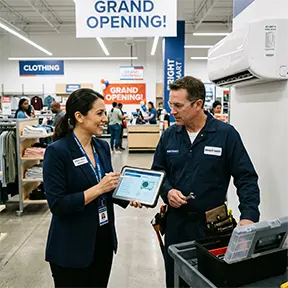 Maintenance departments regularly experience staffing changes.
New technicians often inherit undocumented practices that vary between facilities.
A centralized CMMS supports training by presenting consistent instructions inside every assigned work order.
Rather than depending entirely on verbal explanations, employees review detailed procedures while performing assigned maintenance.
Experienced technicians also benefit because standardized documentation reduces uncertainty during unfamiliar repairs.
The organization develops a common maintenance language that follows employees regardless of facility assignment.
Cross-location staffing becomes much easier because technicians already understand company procedures.
Customer Expectations Stay Consistent
Customers rarely think about maintenance until something goes wrong.
A hotel guest notices an uncomfortable room temperature. A grocery shopper encounters malfunctioning refrigeration equipment. A gym member discovers broken fitness equipment. A manufacturing customer receives products affected by inconsistent equipment care.
Each experience shapes opinions about the brand.
Maintenance consistency quietly supports customer satisfaction by keeping facilities operating according to established standards.
A centralized CMMS helps every location deliver similar equipment performance, maintenance quality, documentation, and compliance practices.
Customers experience reliability instead of variation.
That consistency strengthens trust across every location the organization operates.
Protecting Brand Standards Across Every Location
Business expansion brings opportunities, but it also increases the challenge of maintaining one consistent identity across every location. A centralized CMMS helps organizations preserve the maintenance standards that support customer expectations, employee safety, and equipment reliability from the first facility to the fiftieth. As companies continue adding locations, the organizations that treat maintenance as part of their brand culture position themselves to deliver the same dependable experience wherever customers walk through the door.
FAQs
Can CMMS work for multiple facilities?
Yes. A multi-facility CMMS allows organizations to manage maintenance, assets, work orders, and standardized procedures across all locations from one centralized system.
How does a CMMS help maintain brand consistency across multiple locations?
A CMMS keeps Standard Operating Procedures (SOPs), maintenance schedules, and compliance checklists consistent so every facility follows the same maintenance standards.
Why is standardized maintenance important for franchise businesses?
Standardized maintenance helps every location deliver a consistent customer experience, reduces unauthorized repair methods, and supports company quality standards.
Can the MAPCON CMMS manage approved vendors for different facilities?
Yes. The MAPCON CMMS helps organizations maintain approved vendor lists and standardized maintenance procedures so every location follows established company guidelines.
How does a centralized CMMS improve compliance across multiple sites?
A centralized CMMS stores inspection records, safety checklists, and maintenance documentation in one place, making it easier to demonstrate compliance during audits.
What industries benefit most from a multi-facility CMMS?
Industries such as manufacturing, healthcare, retail, hospitality, education, commercial fitness, and property management all benefit from centralized maintenance management across multiple locations.
MAPCON | 800-922-4336
Try Our CMMS Software Today!
MAPCON CMMS software empowers you to plan and execute PM tasks flawlessly, thanks to its wealth of features and customizable options. Want to see it for yourself? Click the button below to get your FREE 30-day trial of MAPCON!