




Published September 07, 2026
by mapcon
• Updated September 07, 2026
Reactive vs. Preventive Maintenance: What Your CMMS Reveals About Team Behavior
The Work Order Queue Tells the Real Story
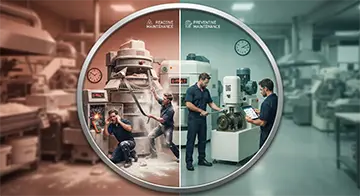 What's the difference between reactive vs. preventive maintenance in a CMMS? Most facilities point to downtime figures or emergency repair invoices, but the sharper contrast shows up in how technicians feel when they clock in each morning.
Setting aside traditional cost comparisons, looking directly at the work order queue reveals how reactive chaos and preventive rhythm shape daily morale, documentation quality, and long-term equipment reliability. The gap between these two strategies runs deeper than machines and replacement parts.
Open a reactive facility's CMMS dashboard and the queue looks like a scoreboard of near-misses: overdue tickets stacked next to emergency tags, half-finished notes, and technicians jumping between unrelated breakdowns. Open a preventive facility's queue and a different pattern appears. Tasks sit in orderly blocks, assigned days ahead, tied to structured checklists and pre-staged crib inventory.
This difference matters because a work order queue reflects more than scheduling logic. It reflects how a team plans its day, how much control technicians hold over their own time, and whether documentation happens with care or gets rushed to close a ticket. A CMMS captures this pattern automatically, giving supervisors a mirror for team behavior that raw downtime metrics never show.
Reactive Maintenance: Firefighting on Repeat
Reactive maintenance waits for equipment failure, then scrambles to respond. A pump seizes, a conveyor jams, or a compressor trips offline, forcing the team to drop whatever they planned to chase the fire.
According to benchmark studies by the Society for Maintenance & Reliability Professionals (SMRP), organizations operating in a reactive state spend up to four times more on repairs compared to planned maintenance activities.
In a reactive environment, technicians create work orders after the fact, often typing in details from memory hours later. Root cause fields sit blank or contain generic notes like "fixed, ran again" because the production line needed to restart immediately.
Over weeks and months, this pattern produces what maintenance managers call "firefighter fatigue." Technicians start every shift bracing for the next alarm rather than executing a structured plan. Work order churn climbs as tickets get created, half-completed, and reopened. Skilled technicians spend less time actually turning wrenches and more time hunting for tools, parts, or historical records about what broke last time and why.
A CMMS doesn't cause this pattern, but it clearly exposes it. Ticket volume spikes, average time-to-close stretches out, and documentation fields sit empty far more often than in a scheduled environment. Supervisors who track these operational signals catch burnout risk long before it shows up in turnover numbers.
Maintenance software that delivers real value
MAPCON helps maintenance teams stay ahead of work orders, support better decisions, and reduce downtime.
Preventive Maintenance: Predictable Rhythm, Better Records
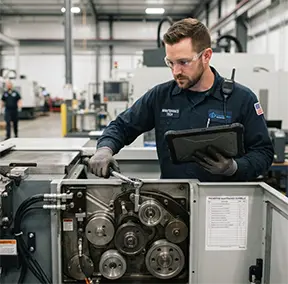 Preventive maintenance flips the sequence entirely. Instead of waiting for a breakdown, the CMMS triggers inspection and service tasks on a set interval, tied to operating hours, calendar days, or production cycles.
Technicians know what their week looks like before it starts. Parts get pulled and staged ahead of time. Digital checklists guide each step, which means measurements, torque values, and wear readings get logged in real time instead of reconstructed later from memory.
This rhythm changes labor patterns in ways that go beyond fewer breakdowns:
- Higher Wrench Time: Technicians spend less time searching for answers and more time performing actual maintenance.
- Streamlined Onboarding: Junior technicians follow clear, documented procedures rather than shadowing senior staff through unexpected crises.
- Higher Data Integrity: Historical records inside the CMMS reflect calm, accurate observations rather than rushed notes written under pressure.
Real-World Impact: Comparing Industrial Facilities
Operational Metric Reactive Environment Preventive Environment (CMMS-Driven)
Work Order Status Overdue tickets, emergency tags Scheduled blocks, pre-staged parts
Technician Entry Reconstructed hours later from memory Completed in real time via mobile checklists
Failure Analysis Blank fields or generic "fixed" notes Precise wear readings and root cause logging
Inventory Planning Emergency part orders and stockouts Pre-calculated reorder points and pre-staged kits
Team Morale High burnout, constant shift interruptions Structured shifts, high confidence and control
Industry Example: A Bakery Floor Shows the Gap in Real Time
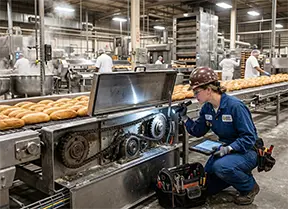 Picture a commercial bakery running three shifts on an industrial mixing line. In a reactive setup, a mixer blade jams mid-batch during the afternoon run. The crew scrambles, someone opens an emergency work order on the fly, and a technician grabs whatever spare bearing sits closest on the shelf rather than the specified part.
Nobody logs why the blade jammed in the first place, because the immediate priority is restarting the line before the dough spoils. The work order closes with a one-line note, and the exact same failure quietly returns six weeks later.
Image 3: Conducting planned inspection checklists during scheduled downtime prevents mid-batch equipment failures.
Now picture the same bakery running preventive maintenance through its CMMS. Every other week, during a planned sanitation shift when the mixer sits idle anyway, the system auto-generates a "Dry Run & Drive Chain Inspection" work order. A technician follows a step-by-step checklist, logs exact bearing wear measurements against baseline readings, and checks blade alignment before it becomes a problem.
Replacement parts get pre-staged days in advance based on what the last three inspections showed. The result: a calmer shift, an accurate maintenance history, and a crew that trusts the schedule instead of dreading the next unplanned stop.
The same pattern shows up across other food and beverage settings:
- Industrial Laundries: Scheduling lint trap and drive belt inspections during off-peak hours avoids mid-shift belt snaps.
- Bottling Plants: Building gasket and seal checks into changeover windows prevents pausing full production to chase minor leaks.
Accelerate your maintenance results
Pick the next step that fits you best: start your free trial or see MAPCON live with our team.
How a CMMS Changes Technician Behavior, Not Just Machine Uptime
The human capital angle deserves far more attention than it usually receives in maintenance planning conversations. A reactive environment trains technicians to expect chaos, which affects hiring, retention, and how carefully people document their work. New hires in a reactive shop learn maintenance as crisis response, and that mindset sticks even after the immediate fire gets put out.
A preventive environment trains technicians differently. Digital checklists inside the CMMS teach process discipline. Scheduled tasks give technicians ownership over specific equipment rather than a rotating cast of emergencies. Supervisors gain a clearer view of who completes tasks accurately and who needs coaching, since preventive work orders produce consistent, comparable records instead of one-off notes written under pressure.
This shift also transforms workplace accountability. In a reactive shop, blame often lands vaguely, since nobody can say for certain what caused a breakdown or whether it could have been caught earlier. In a preventive shop, the CMMS holds an auditable trail of inspections, readings, and completed tasks. That trail protects technicians who did their jobs correctly and flags gaps where a task got skipped or rushed.
Building the Shift from Reactive to Preventive
Moving a maintenance team off reactive habits doesn't happen overnight, but a CMMS provides a clear operational roadmap:
- Audit Critical Assets: Rank assets by failure impact rather than failure frequency. A primary mixer that halts an entire production line deserves a tighter inspection interval than a backup pump sitting idle.
- Build Custom Checklists: Create checklists that match how equipment actually fails, using direct technician input rather than relying solely on generic manufacturer manuals.
- Set Realistic Intervals: Establish intervals using a mix of calendar time and usage metrics (meter hours, cycle counts) already captured inside your CMMS.
- Conduct Regular Data Reviews: Review completed work orders regularly to identify wear patterns, parts consumption anomalies, and technician coaching opportunities.
None of this requires flashy tools or speculative forecasting. It requires consistent scheduling, clear checklists, and a CMMS that makes planned work as visible and trackable as emergency repairs.
Protecting the Judgment and Morale of Your Team
The reactive-versus-preventive conversation usually stops at cost per repair or hours of downtime avoided, but that framing misses the people doing the work. A maintenance team's confidence, patience, and willingness to document honestly all trace back to whether their days follow a clear plan or a series of chaotic alarms.
A CMMS built around scheduled, well-documented tasks doesn't just protect equipment. It protects the judgment, safety, and morale of the people keeping that facility running, shift after shift.
FAQs
What is the difference between reactive and preventive maintenance?
Reactive maintenance fixes equipment after it fails, while preventive maintenance schedules inspections and service before a breakdown happens. A CMMS helps teams track both approaches and shift more work toward planned maintenance.
How does a CMMS help reduce reactive maintenance?
A CMMS automates scheduling for inspections and service tasks based on time or usage, helping teams catch issues before they cause downtime. MAPCON's CMMS lets facilities set recurring preventive maintenance work orders across multiple asset types.
Is preventive maintenance always better than reactive maintenance?
Preventive maintenance reduces unplanned downtime and improves documentation, but not every asset needs the same level of scheduled care. Low-risk or backup equipment may still run on a reactive basis without much impact.
What industries benefit most from preventive maintenance software?
Manufacturing, food processing, and facilities with continuous production lines see the biggest gains from preventive maintenance software because unplanned stops directly affect output. A CMMS like MAPCON helps these industries build consistent inspection schedules around production cycles.
How does a CMMS improve work order documentation?
A CMMS provides checklists and required fields that guide technicians through each task, leading to more complete and accurate records. This reduces the guesswork that often comes with rushed, reactive repairs.
Can a CMMS support both reactive and preventive maintenance?
Yes, a CMMS tracks emergency work orders alongside scheduled preventive tasks in the same system. MAPCON's CMMS gives teams visibility into both types of work so they can measure progress toward a more planned maintenance strategy.
MAPCON | 800-922-4336
Try Our CMMS Software Today!
MAPCON CMMS software empowers you to plan and execute PM tasks flawlessly, thanks to its wealth of features and customizable options. Want to see it for yourself? Click the button below to get your FREE 30-day trial of MAPCON!