




Published October 14, 2026
by mapcon
• Updated October 14, 2026
How Does CMMS Handle Seasonal Tasks Through Mothballing and Recommissioning

Seasonal equipment follows a maintenance cycle that differs from year-round assets. The question How Does CMMS Handle Seasonal Maintenance Tasks goes beyond recurring inspections because seasonal assets require careful shutdown, protected storage, and well-planned startup activities. A modern CMMS supports each phase with flexible scheduling, specialized work orders, and detailed maintenance histories that remain intact from one season to the next.
Why Seasonal Maintenance Requires a Different Strategy
Many organizations rely on equipment that only operates during specific months. Agricultural machinery, amusement park rides, snowmaking equipment, irrigation systems, outdoor cooling towers, and holiday production lines all spend part of the year inactive.
When equipment sits unused for months, maintenance priorities shift dramatically. Daily inspections no longer matter, while preservation activities become critical. Improper storage can lead to corrosion, contamination, seized bearings, damaged seals, dead batteries, or degraded fluids. At the same time, maintenance managers cannot simply delete recurring preventive maintenance schedules because the equipment will return to service.
This challenge introduces a different maintenance philosophy known as mothballing.
Rather than treating inactive equipment as forgotten assets, organizations intentionally prepare machinery for storage while protecting long-term reliability. A CMMS supports this transition by replacing active operating schedules with storage-specific maintenance workflows.
Automating Seasonal Maintenance Workflows with CMMS Software
The answer lies in scheduling flexibility rather than maintaining one static maintenance calendar throughout the year.
A CMMS allows maintenance managers to temporarily suspend operational preventive maintenance work orders while activating an entirely different maintenance profile designed for equipment storage.
Instead of scheduling weekly inspections on equipment that no longer operates, the CMMS automatically generates work orders such as:
- Draining water systems
- Flushing hydraulic lines
- Replacing operating fluids with storage-grade lubricants
- Applying corrosion inhibitors
- Disconnecting batteries
- Installing protective covers
- Locking moving assemblies
- Recording storage conditions
- Documenting preservation photographs
Each completed task becomes part of the equipment's maintenance history without disrupting previous records.
When operating season returns, the CMMS automatically shifts the maintenance profile again, triggering recommissioning procedures rather than immediately returning equipment to production.
This controlled transition reduces overlooked tasks while giving maintenance supervisors complete visibility into seasonal assets.
Accelerate your maintenance results
Pick the next step that fits you best: start your free trial or see MAPCON live with our team.
The Mothballing Strategy: Reversing Maintenance Profiles
Most discussions about preventive maintenance focus on increasing inspection frequency during busy periods. Seasonal operations introduce the opposite challenge.
Equipment moving into storage needs fewer operational inspections but more preservation procedures.
A CMMS supports this reversal by allowing maintenance teams to deactivate one maintenance schedule while activating another.
Winter operations may require daily lubrication checks and weekly operational testing. During storage, those recurring inspections pause automatically.
Instead, the CMMS schedules specialized preservation work orders that match manufacturer recommendations and internal maintenance standards.
For example, storage procedures may include:
- Removing moisture from compressed air systems
- Greasing exposed mechanical joints
- Sealing electrical connections
- Rotating shafts monthly
- Checking storage humidity
- Replacing desiccant packs
- Inspecting protective coverings
Each activity follows its own recurring schedule until the operating season returns.
This flexible scheduling reduces unnecessary work while protecting expensive equipment from avoidable deterioration.
Managing Recurring Tasks Without Losing Maintenance History
 One concern many maintenance departments face involves historical records.
If recurring preventive maintenance schedules simply disappear during the offseason, reporting becomes fragmented. Managers lose visibility into previous inspections and future scheduling.
A CMMS avoids this problem.
Instead of deleting preventive maintenance programs, the system temporarily pauses recurring operational work orders while preserving every historical record attached to the asset.
Maintenance planners can review:
- Previous shutdown procedures
- Earlier recommissioning checklists
- Past repairs
- Inspection notes
- Labor hours
- Parts consumption
- Compliance documentation
When seasonal equipment returns to service, technicians continue working from the same asset record rather than creating duplicate equipment histories.
This continuity improves documentation while simplifying long-term asset management.
Accelerate your maintenance results
Pick the next step that fits you best: start your free trial or see MAPCON live with our team.
Automated Lead-Time Scheduling Before Operations Resume
Preparing seasonal equipment rarely begins the day operations restart.
Many organizations require weeks or even months of preparation before opening.
A CMMS supports this process by automatically generating work orders well ahead of operational deadlines.
Examples include:
- Ordering replacement filters
- Scheduling contractor inspections
- Reserving testing equipment
- Assigning technician labor
- Performing safety certifications
- Conducting operational testing
- Completing lubrication programs
- Verifying replacement parts inventory
Instead of depending on calendar reminders or handwritten notes, maintenance teams receive automatic notifications based on lead times established within the CMMS.
This scheduling approach helps organizations avoid last-minute maintenance bottlenecks.
Industry Example: Commercial Ski Resorts
Commercial ski resorts present one of the strongest examples of seasonal maintenance complexity.
Throughout winter, maintenance teams inspect aerial lifts every day. Snowmaking pumps run continuously, grooming machines operate overnight, and heating systems support guest facilities around the clock.
When spring arrives, operational priorities change immediately.
Rather than continuing winter inspections, technicians begin an organized shutdown process.
A CMMS automatically replaces winter preventive maintenance schedules with summer preservation work orders.
Storage procedures may include draining water lines, cleaning snowmaking equipment, protecting hydraulic cylinders, servicing lift motors, preserving electrical systems, and documenting completed storage inspections.
Throughout summer, the CMMS schedules periodic preservation activities instead of daily operational inspections.
Months before the first snowfall, automated alerts begin generating recommissioning work orders.
Maintenance crews inspect lift cables, perform load testing, service braking systems, refill fluids, inspect electrical controls, verify emergency equipment, and complete required safety documentation.
Because the CMMS manages every transition automatically, resort managers gain confidence that critical preparation starts early enough for opening day.
Agricultural Equipment Benefits from Seasonal Scheduling
Farm operations also depend heavily on seasonal maintenance.
Planting equipment may remain inactive for months after harvest. Combines, seed drills, irrigation pumps, and harvesting machinery require extensive preservation before storage.
Rather than relying on memory, maintenance supervisors schedule shutdown activities through the CMMS.
Storage work orders might include cleaning crop residue, changing engine oil, lubricating moving parts, draining chemical systems, inspecting belts, protecting electronics, and recording equipment condition.
Months later, recommissioning work orders automatically appear before planting season.
Technicians inspect hydraulic hoses, reinstall batteries, replace filters, refill fluids, test lighting systems, calibrate controls, and verify safety equipment before machines return to the fields.
The entire maintenance cycle stays connected under one equipment record.
Outdoor Recreation Facilities Face Similar Challenges
Municipal recreation departments often maintain assets that operate only during warmer months.
Water slides, splash pads, irrigation pumps, outdoor lighting systems, concession equipment, and park attractions spend winter shut down.
Without structured seasonal planning, maintenance tasks easily slip through the cracks.
A CMMS assigns storage procedures immediately after closing day.
As reopening approaches, automated scheduling reminds technicians about:
- Water quality testing
- Pump inspections
- Safety barrier installation
- Electrical verification
- Surface cleaning
- Mechanical testing
- Regulatory inspections
The system helps maintenance managers coordinate labor across multiple parks without depending on manual scheduling.
Parts Management During Seasonal Shutdowns
Seasonal maintenance involves more than equipment inspections.
Replacement components also require careful planning.
A CMMS links maintenance schedules with spare parts requirements.
When shutdown work orders generate automatically, technicians know which preservation materials they need before beginning work.
Common inventory items include:
- Corrosion inhibitors
- Protective coatings
- Lubricants
- Desiccants
- Filters
- Storage wraps
- Protective caps
- Battery maintainers
Likewise, recommissioning work orders identify replacement parts required before equipment returns to service.
This visibility supports purchasing decisions months ahead of seasonal demand.
Supporting Technician Workloads Throughout the Year
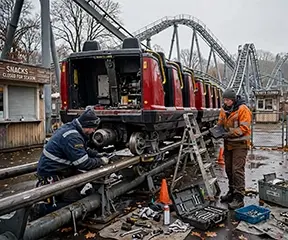 Seasonal operations often create uneven maintenance workloads.
Busy seasons demand constant inspections, while slower months offer opportunities for planned maintenance and equipment preservation.
A CMMS helps maintenance managers balance technician assignments by automatically shifting work order priorities.
During shutdown periods, teams can focus on:
- Major overhauls
- Equipment cleaning
- Documentation updates
- Component replacement
- Storage inspections
- Capital improvement projects
As operational season approaches, the CMMS gradually introduces recommissioning tasks based on planned opening dates.
Maintenance departments avoid sudden spikes in workload because preparation starts well before equipment returns to service.
Compliance and Documentation Stay Intact
Many seasonal industries operate under strict inspection requirements.
Whether managing ski lifts, amusement rides, public recreation facilities, or commercial agricultural equipment, maintenance records often support insurance reviews, regulatory inspections, and internal audits.
A CMMS documents every preservation procedure alongside routine maintenance records.
Technicians record:
- Completed work
- Inspection results
- Photos
- Labor hours
- Replacement parts
- Safety checklists
- Supervisor approvals
When inspectors request documentation months later, maintenance managers can quickly retrieve complete equipment histories without sorting through paper files.
Scheduling Flexibility Improves Long-Term Equipment Care
Seasonal assets rarely follow predictable year-round maintenance calendars.
Instead, they move through distinct operational phases that demand different maintenance priorities.
A CMMS supports this changing environment by allowing maintenance schedules to evolve with equipment usage rather than forcing one recurring schedule to cover every situation.
Maintenance planners can build separate workflows for operation, storage, overhaul, and recommissioning while preserving complete maintenance histories under each asset.
That flexibility helps organizations protect equipment investments while reducing administrative effort and improving maintenance consistency from season to season.
How Does CMMS Handle Seasonal Maintenance Tasks?
Organizations that depend on seasonal equipment face a maintenance calendar unlike any other. Every transition between active service and storage carries important responsibilities that affect reliability, safety, and readiness months later. Implementing MAPCON CMMS software gives maintenance teams a practical solution to manage these transitions through structured scheduling, dedicated mothballing procedures, and automated structured work orders.
FAQs
How does CMMS handle seasonal maintenance tasks?
A CMMS manages seasonal maintenance by pausing routine preventive maintenance schedules, creating storage-specific work orders, and automatically scheduling recommissioning tasks before equipment returns to service.
What is equipment mothballing in maintenance?
Equipment mothballing involves preparing assets for long-term storage through tasks such as draining fluids, applying corrosion protection, and documenting equipment condition to prevent damage during inactivity.
Why is seasonal maintenance important for equipment reliability?
Seasonal maintenance helps protect equipment from corrosion, contamination, and wear that can occur during long periods of inactivity, making startup safer and more efficient.
Can the MAPCON CMMS manage seasonal equipment shutdowns and startups?
Yes. The CMMS from MAPCON allows maintenance teams to schedule shutdown procedures, storage inspections, and pre-season startup work orders while maintaining complete equipment histories.
What industries benefit most from seasonal maintenance scheduling?
Industries such as ski resorts, agriculture, parks and recreation, amusement facilities, and irrigation operations benefit from structured seasonal maintenance scheduling because their equipment operates only during certain times of the year.
How do recurring maintenance schedules work with seasonal equipment?
A CMMS can temporarily pause recurring operational tasks, activate storage maintenance schedules, and then automatically resume appropriate work orders when the operating season approaches.
MAPCON | 800-922-4336
Try Our CMMS Software Today!
MAPCON CMMS software empowers you to plan and execute PM tasks flawlessly, thanks to its wealth of features and customizable options. Want to see it for yourself? Click the button below to get your FREE 30-day trial of MAPCON!