




Published November 19, 2025
by Stephen Brayton
• Updated June 07, 2026
How Repairable Spare Parts Improve Maintenance Efficiency
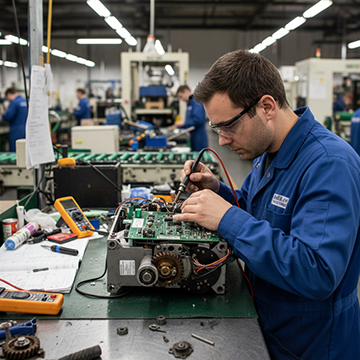 One of the main goals of a maintenance department is to reduce costs in both labor and materials. You have to have workers to accomplish the jobs, but you want efficiency and productivity in those tasks. On the other hand, you can control the cost of materials in numerous ways. This article discusses the benefits of having repairable spare parts and how they benefit productivity and efficiency.
What Are Repairable Spare Parts and Why Do They Matter?
Repairable spare parts refer to components or equipment that technicians or mechanics can restore or repair to a usable state. Instead of regularly discarding and replacing, these parts undergo repair or maintenance procedures to extend their lifecycle. This helps to reduce purchasing costs and also the need for excessive inventory. Examples of repairable spare parts include motors, pumps, valves, gears, and circuit boards.
Establishing an Effective Spare Parts Management System
For a company to benefit from repairable spare parts, maintenance should devise the correct system. The following tips will help you start.
A. Inventory Management
While this point warrants an entire post itself, we'll focus here on those repairable parts. If you haven't created a list of your inventory, make this the first step. Then, somewhere on the record, note each repairable item. Read further to see the ease of inventory records in a computerized maintenance management system (CMMS). Other bits of information you can have include: historical data, equipment criticality, and maintenance requirements. Categorize parts based on their repair frequency and criticality to prioritize inventory levels and ensure timely availability.
B. Documentation and Tracking
Implement a robust system to document and track spare parts usage, repairs, and replacements. This data helps in identifying usage, predicting failure rates, and optimizing the ordering process.
C. Standardization
Standardize spare parts to the extent possible to minimize the number of different parts in inventory. This simplifies repairs, reduces training requirements, and ensures the availability of compatible components.
D. Vendor Management
Develop strong relationships with reliable vendors to ensure an efficient purchase order/purchase receiving process. Regularly evaluate vendor performance and negotiate favorable terms for discounts for bulk orders and better shipping methods.
E. Quality Control
Implement stringent measures to ensure the reliability and durability of repairable spare parts. Conduct regular inspections and testing. A part has no value with shoddy repair.
Accelerate your maintenance results
Pick the next step that fits you best: start your free trial or see MAPCON live with our team.
Benefits of Utilizing a CMMS for Managing Repairable Spare Parts
This centralized database stores your assets, inventory, preventive maintenance tasks, and work orders, and you can use the same system for purchasing. Let's highlight some advantages CMMS software has for repairable spare parts.
A. Centralized Spare Parts Database
As mentioned above, you create a list of inventory in your CMMS. The software helps keep you organized. You decide what information about each part or supply to input into the system based on your maintenance operations. Again, look for the notation that designates a repairable part.
Some of the information to include in the records - part numbers, descriptions, quantities, specifications, repair history, and vendor details.
Also, the location of each part within the warehouse/stockroom reduces search time.
B. Inventory Optimization
By analyzing historical data and usage patterns, a supervisor can better analyze future demand. You want an optimal quantity. Not too many if you don't use a certain part often. Not too few in case of emergencies.
C. Work Order Management
When a supervisor creates a work order, he can indicate which parts to use. With clear instructions, the technician understands what to do with the reusable part. Part of the work order may include repairing the replaced part.
D. Preventive Maintenance Planning
You might have these repairable parts as part of routine preventive maintenance jobs. Again, using historical records and perhaps manufacturer recommendations, you better plan the swapping out of repairable parts.
E. Reporting
CMMS-generated reports add more value to not only the software but your operations. It will have enough filters and parameters to adjust to hone in on the specific data you want.
For instance, these repairable parts. What information about them do you want? Vendor? Frequency of replacement? Failures? History of repairs? A CMMS offers all of these and more.
Maintenance software that delivers real value
MAPCON helps maintenance teams stay ahead of work orders, support better decisions, and reduce downtime.
Best Practices to Maximize ROI on Repairable Spare Parts
Now that we've looked at benefits, let's go a little deeper into maintenance operations.
A. Lifecycle Management
Regularly assess the lifecycle of repairable spare parts to determine the cost-effective time to repair or replace them. You might use a depreciation chart for assets. The reports mentioned in the last section will also aid you in deciding when to buy new.
B. Standard Repair Procedures
If Bob repairs a part one way, Paul shouldn't change the process on the next repair. This ensures consistency, reduces repair time (the efficiency mentioned several times), and improves the effectiveness of repairs.
C. Root Cause Analysis
What is the failure, and why did it happen? Knowing the answers to these questions can save the cost of constantly changing out spare parts.
D. Training and Knowledge Sharing
Provide training to maintenance personnel on the proper handling, storage, and repair techniques for repairable spare parts. For some, these opportunities may expand maintenance skills for workers.
E. Regular Audits and Reviews
Conduct regular audits of repairable spare parts inventory to identify obsolete or excess items. Review the effectiveness of repairs and the entire repair strategy.
Real-World Examples of Effective Repairable Spare Parts Management
A. Aerospace Industry
Airlines and aerospace manufacturers collaborate with Original Equipment Manufacturers (OEMs) and specialized repair centers. Along with safety inspections, you would expect lower costs in these industries with the use of repairable spare parts process.
B. Automotive Industry
Auto manufacturers implement efficient spare parts management systems to support their service networks. They employ centralized databases and streamlined logistics.
C. Power Generation
Turbines, generators, and other critical equipment use repairable spare parts. This saves the costs of buying and installing new.
Repairable Spare Parts and CMMS: Your Strategy for Maintenance Efficiency
Many facilities save time and expenses by utilizing repairable spare parts. They find more efficiency in replacing a motor within a unit than replacing the entire unit. Companies may have a series of motors or pumps to cycle through. In time, of course, even those motors will wear out or need to be replaced, but look at the time and money saved with extended lifespans.
Using a CMMS to record repair history, schedule preventive maintenance work orders, and track costs benefits numerous maintenance departments. It provides organization to so many areas of your operations.
Consider using CMMS software for your spare parts inventory.
FAQs
What are repairable spare parts?
Repairable spare parts are components that can be restored to working condition instead of being replaced, helping reduce costs and waste.
How do repairable spare parts improve maintenance efficiency?
They minimize downtime and inventory expenses by allowing parts to be repaired and reused, boosting operational productivity.
What is the role of a CMMS in managing repairable spare parts?
A CMMS helps track, document, and organize repairable spare parts to ensure timely repairs and accurate inventory control.
How does MAPCON’s CMMS support spare parts management?
MAPCON’s CMMS provides tools for tracking repair history, managing vendors, and optimizing spare parts inventory efficiently.
Why is inventory management important for repairable spare parts?
Proper inventory management ensures critical parts are available when needed and helps avoid unnecessary purchases or delays.
How can businesses reduce costs using repairable spare parts?
By repairing rather than replacing components, businesses lower material expenses and extend the life of valuable equipment.
MAPCON | 800-922-4336
Try Our CMMS Software Today!
MAPCON CMMS software empowers you to plan and execute PM tasks flawlessly, thanks to its wealth of features and customizable options. Want to see it for yourself? Click the button below to get your FREE 30-day trial of MAPCON!