




Published December 08, 2025
by Stephen Brayton
• Updated June 07, 2026
How AI Transforms CMMS Capabilities in Today’s Maintenance Landscape
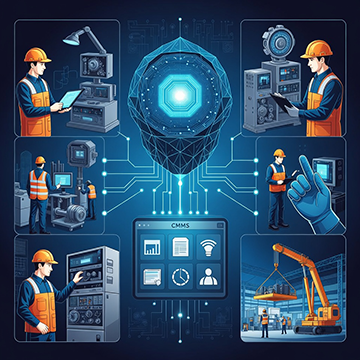 Artificial intelligence continues to reshape maintenance management at a rapid pace, and its influence grows stronger each year. How AI transforms CMMS capabilities in today’s maintenance landscape introduces a shift in how companies handle data, make decisions, and respond to changing operational demands. This transformation affects organizations of every size.
Why AI Inside a CMMS Changes Daily Maintenance Work
Traditional CMMS platforms depend heavily on manual searching, fixed dashboards, and structured reports. These functions still deliver value, yet they often limit the depth of insight maintenance teams can pull from the system. AI changes that dynamic. Instead of static reporting, teams gain a conversational partner that understands maintenance history, asset hierarchies, material usage patterns, technician performance, vendor details, and compliance records.
AI inside a CMMS navigates that data at high speed. When teams need answers, AI responds with context-rich explanations rather than simple lists or charts. A technician asking for past failures on a chiller receives details that span failure modes, parts consumed, work duration, and potential patterns. A manager preparing for a budget meeting receives projected spending trends, not just last year’s totals.
This shift toward deeper, more accessible insights reduces delays that often slow maintenance operations. AI also shortens the time spent sorting through modules, menus, or export files. Maintenance teams gain space for critical thinking and fieldwork rather than tedious data digging.
Faster Information Retrieval Without Rigid Reports
Many CMMS platforms include report builders, but these tools rarely capture the full picture maintenance teams need. A report builder follows predefined structures. AI moves beyond them.
AI can search across the entire CMMS database—work orders, asset histories, inventory records, safety procedures, warranties, training logs, vendor performance data—and supply answers in detailed narrative form. This creates benefits such as:
AI understands phrasing, relationships, and intent. A request like "show common issues from last winter across HVAC units" yields a clear explanation rather than isolated rows from a database table. AI connects seasonal context, geographic site data, and asset-family attributes to deliver a richer response.
Accelerate your maintenance results
Pick the next step that fits you best: start your free trial or see MAPCON live with our team.
Search That Operates Across Humans’ Language Patterns
Maintenance technicians often phrase requests in practical language: "What caused that pump to fail again last month?" or "How many belts have we replaced in the north plant since August?" AI interprets these natural-language queries instantly. Staff waste less time guessing which module holds the answer.
When a supervisor needs to adjust labor assignments or reschedule tasks, AI pulls up workload data, skill sets, shift coverage, weather factors, and vendor availability in seconds. Quick access strengthens decisions made under pressure.
AI-Enhanced Work Order Intelligence
Work orders often house the bulk of maintenance knowledge, yet they also create the largest bottleneck when technicians need historical detail. AI changes how teams interact with this information.
AI reads work orders as narrative documents, not just fields and timestamps. It understands descriptions of symptoms, technician observations, asset conditions, delays, or special circumstances. The system can then:
- Identify recurring language that hints at underlying failure patterns
- Highlight unusual conditions technicians noted during previous repairs
- Cross-reference similar work orders across multiple sites or assets
- Suggest likely causes based on patterns from related work orders
This level of insight would normally require a lengthy investigation or the knowledge of a senior technician with years of experience. AI delivers it instantly.
Better Maintenance Planning Through Data-Centric Intelligence
Maintenance planning often suffers from incomplete information. AI improves planning by interpreting trends hidden within large volumes of historical data.
AI evaluates past task durations, technician travel times, inventory availability, and asset criticality. It then suggests scheduling improvements that reduce bottlenecks without introducing extra constraints. Planners gain a clear understanding of which tasks need priority due to risk or compliance sensitivity.
Although deep predictive maintenance discussions fall outside this article’s scope, AI still plays a meaningful role in inventory decisions. By reading usage patterns, vendor lead times, and past emergency purchase records, AI recommends stocking levels that keep maintenance moving. The system alerts planners when parts show unusual consumption or when vendor performance shifts.
AI interprets cost patterns across labor, parts, downtime, and outsourced work. Since AI understands context, it doesn’t rely on straight-line projections. Instead, it weighs seasonal effects, regulatory cycles, or recurring industry trends. Leaders gain financial forecasts that align with how maintenance functions in real operational environments.
Stronger Compliance and Audit Preparation
Compliance demands strict documentation, accurate recordkeeping, and fast access to details during audits. AI handles these needs with precision.
When auditors request information—such as calibration logs, PM completion records, inspection photos, or certification dates—AI retrieves everything without digging through folders or exporting spreadsheets. The system can also highlight missing documentation before audits begin, giving teams time to correct gaps.
AI improves safety planning as well. By reading incident reports and training records, it identifies patterns that warn of possible future issues. These insights help organizations adjust training schedules, revise procedures, or reinforce communication across sites.
How AI Enhances Technician Expertise
Technicians rarely enjoy searching through manuals, code books, or asset histories. When a machine fails during peak production, slow data retrieval raises downtime risk. AI provides immediate access to the right information.
AI answers repair questions, references previous fixes, lists relevant parts, and retrieves documentation. A technician working on a conveyor can ask for torque specs, production history, or earlier service notes. AI responds without switching screens or digging through menus.
Many industries face a shortage of experienced technicians. AI helps bridge this gap by highlighting patterns that veterans would normally catch—recurring vibration reports, subtle temperature increases, or part failures tied to specific suppliers. Younger technicians gain decision support while they build expertise.
Shift handoffs often cause confusion when notes lack detail. AI synthesizes shift logs, open work orders, sensor alerts, and technician comments into digestible summaries that reduce miscommunication.
Maintenance software that delivers real value
MAPCON helps maintenance teams stay ahead of work orders, support better decisions, and reduce downtime.
Industry Examples That Show AI’s CMMS Value
Manufacturing
Factories handle thousands of moving parts. AI inside a CMMS quickly analyzes downtime patterns, material shortages, and line-specific work histories. Production managers use these insights to adjust labor assignments or plan maintenance windows with fewer interruptions.
Facilities Management
Facility managers juggle HVAC systems, lighting networks, access control, plumbing, and vendor contracts across diverse buildings. AI helps evaluate which buildings demand attention first, pulls up past inspection findings, and assists staff in responding to service requests more accurately.
Transportation and Fleet Operations
Fleets rely on precise maintenance schedules and fast access to repair data. AI extracts trends across fuel consumption, brake wear, tire replacements, and route conditions. Fleet managers gain insights that support safer, more cost-effective operations.
Energy and Utilities
Utility companies handle large asset networks spread across vast locations. AI helps staff locate relevant data during emergencies, such as outage investigations or pipeline inspections. Teams can ask for historical outage causes, equipment behavior under stress, or contractor performance. AI retrieves everything with speed that traditional CMMS tools rarely match.
The Emerging Role of Predictive Insight (Without Diving Too Deep)
While a full discussion of sensor-driven predictive maintenance remains outside this article’s focus, AI still contributes meaningful value by interpreting whatever limited condition data a CMMS contains. When paired with even modest sensor input, AI spots trends earlier than humans can. It recognizes pressure spikes, temperature swings, or vibration anomalies across multiple assets. These insights lead maintenance staff toward questions worth investigating, without requiring the AI system to replace human judgment.
Even without extensive sensor networks, AI still offers predictive guidance by analyzing text, logs, vendor records, and inventory data. Patterns emerge from narrative descriptions, not just numeric fields. This creates early warnings where companies previously lacked them.
How AI Strengthens Company-Wide Decision Making
AI inside a CMMS connects maintenance data with broader business goals. Leadership teams often challenge maintenance departments with cost control, uptime improvements, safety initiatives, and sustainability targets. AI supports those goals by delivering data-driven clarity.
For example, AI can evaluate the financial impact of chronic failure patterns, quantify downtime risk for aging assets, or reveal how specific vendors affect long-term costs. When leaders need rapid answers for capital planning, AI presents historical and projected data together, reducing guesswork. Decisions gain a foundation built from real operational insight rather than incomplete assumptions.
Strengthening Maintenance Culture Through Knowledge Centralization
Maintenance culture thrives when everyone has access to knowledge that drives decisions. AI improves that culture by centralizing information in a form that staff can access quickly. The system keeps institutional knowledge alive, even when senior personnel retire or shift roles.
This knowledge centralization also reduces training friction. New hires ask the AI about asset histories, procedures, or common troubleshooting paths. They gain immediate access to the same knowledge senior technicians once guarded through experience.
As more users interact with the AI, the CMMS becomes a living knowledge network. It collects questions, improves responses, and learns patterns that matter to the organization.
Future Direction for AI-Driven CMMS Systems
AI continues to evolve. As vendors refine algorithms, expand language models, and connect more data sources, maintenance teams will gain stronger decision support, faster insights, and more intuitive interaction with their CMMS. The shift has already begun: organizations no longer treat their CMMS as a passive database. AI transforms it into an active maintenance partner.
Future versions may understand industry regulations in detail, interpret building automation logs, or assist with workforce planning. None of this replaces human skill. It enhances maintenance capabilities by removing friction that once slowed progress.
A Practical Path Forward for Maintenance Teams
AI’s role inside CMMS platforms invites teams to rethink how they work. Its presence encourages sharper questions, faster answers, and decisions that reflect the real conditions of equipment and teams. Maintenance departments that embrace this shift gain a future-focused approach filled with curiosity, clarity, and greater confidence in the information they rely on.
FAQs
How does AI improve daily maintenance tasks in a CMMS?
AI accelerates data retrieval and delivers contextual insights so teams work faster with better information.
What benefits come from using AI inside MAPCON’s CMMS platform?
MAPCON’s AI-driven tools retrieve asset histories, work details, and parts usage instantly to support maintenance decisions.
Can AI help reduce downtime without relying heavily on predictive sensors?
Yes, AI recognizes patterns in work orders, parts data, and historical trends to flag risks early.
Why does AI matter for maintenance planning?
It identifies trends, evaluates workloads, and highlights resource constraints that influence scheduling and budget decisions.
Does AI assist new technicians in learning equipment history?
Yes, AI explains past issues, repair approaches, and asset behavior in clear language, shortening the learning process.
How fast can AI retrieve complex CMMS data during audits or inspections?
AI gathers calibration logs, PM histories, and compliance records within seconds, reducing audit preparation time.
MAPCON | 800-922-4336
Try Our CMMS Software Today!
MAPCON CMMS software empowers you to plan and execute PM tasks flawlessly, thanks to its wealth of features and customizable options. Want to see it for yourself? Click the button below to get your FREE 30-day trial of MAPCON!