




Published December 31, 2025
by Stephen Brayton
• Updated June 07, 2026
Flexible CMMS Maintenance Management Software Benefits
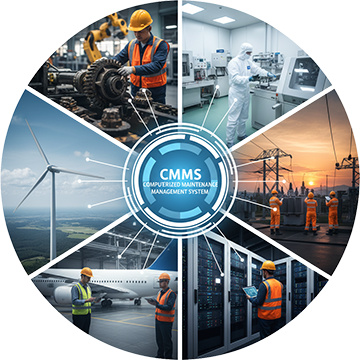 Computerized maintenance management systems (CMMS) have benefited and organized maintenance practices across diverse industries. Why? Because of the CMMS conveniences of versatility, flexibility, and adaptability.
Look at companies from large-scale manufacturing and energy production to smaller operations like churches, libraries, and hotels. Hospitals, utilities, transportation, and food processing plants also use a CMMS. The software helps organizations track equipment, manage inventory, schedule preventive maintenance, and streamline work orders. As a result, they experience increased productivity and cost efficiency. By digitizing maintenance processes, a CMMS replaces cumbersome spreadsheets, paper records, and manual reporting.
This discussion explores those three key elements that contribute to CMMS convenience: versatility, flexibility, and adaptability, and how these characteristics enhance the user experience.
How CMMS Maintenance Management Software Delivers Convenience
While the terms versatility, flexibility, and adaptability might seem interchangeable at first glance, each represents a distinct aspect of CMMS functionality. When companies look into investing in a CMMS, they need to keep in mind their needs and look for a system that will fulfill the goals they've established.
Versatility in CMMS Maintenance Management Software
Versatility refers to the ability of a CMMS to perform a wide range of tasks and functions. Think of a Swiss Army knife, a single tool capable of handling numerous jobs. Similarly, a versatile CMMS goes beyond basic preventive maintenance scheduling and offers a comprehensive suite of features. These features often include:
- Asset Management: Tracking equipment details, maintenance history, and performance metrics.
- Preventive Maintenance: Scheduling and managing routine maintenance tasks to prevent equipment failures. You can base these on equipment readings, manufacturer recommendations, maintenance history, and regulatory guidelines.
- Inventory Management: Monitoring stock levels, tracking parts usage, and automating replenishment orders. A CMMS will help you with organizing your stockroom, implementing an issue/return policy, and help you process numbers when you conduct a physical count.
- Purchasing: Streamlining the procurement process, managing vendor relationships, and tracking purchase orders.
- Receiving and Invoicing: You've ordered the inventory, now process the shipment as well as the invoices for payment.
- Work Order Management: Creating, assigning, tracking, and completing work orders. Process work requests. Look for a system that allows non-users to submit requests, for example through an HTML link.
- Reporting and Analytics: Generating reports on any area where you use the system. Key performance indicators (KPIs); cost reports for assets, inventory, and labor; purchasing data; and so much more.
- Integration Capabilities: Connecting with other business systems, such as enterprise resource program (ERP) or accounting software.
- Human Resources: Some systems process timecards and set schedules in keeping with company-honored holidays.
Look at the versatility of CMMS features across different modules. For example, the ability to print barcode labels within both the Inventory and Asset Management modules. This eliminates the need to navigate between separate menus, saving time and effort.
The versatility extends its utility beyond just managing PMs on equipment. The availability of features for other modules allows the CMMS to become a centralized hub for all maintenance-related activities.
Maintenance software that delivers real value
MAPCON helps maintenance teams stay ahead of work orders, support better decisions, and reduce downtime.
Flexibility—Adapting to Evolving Needs
Flexibility, in the context of a CMMS, describes the system's ability to adapt to changing business requirements and user preferences. A flexible CMMS allows organizations to customize the system to match their specific workflows and processes. This might involve:
- Customizable Fields and Forms: Tailoring data entry forms to capture specific information relevant to the organization.
- Configurable Workflows: Defining custom approval processes and routing rules for work orders.
- User-Defined Reports: Creating custom reports to track specific metrics and analyze performance data.
- Role-Based Access Control: Granting different levels of access to users based on their roles and responsibilities.
Think of flexibility as synonymous with scalability. Keep this in mind when researching a CMMS. You have your goals in mind. Can you purchase what you need from the provider? For instance, while some companies incorporate barcoding, your operation doesn't use it. So, why should you purchase a package deal that includes barcoding along with the modules you really need?
Of course, once you have the modules you want, you'll find features and options that may not pertain to your operations, but, you may see a need for them later. The existence of various features can also spark new ideas among plant supervisors or administrators. You might incorporate an innovative way of using the system to improve efficiency.
This flexibility/scalability convenience also extends to the system's ability to accommodate future growth and changes in the organization. As the business expands or new requirements emerge, a flexible CMMS can be easily adapted to meet these evolving needs.
For example, if a company experiences rapid growth and needs to purchase significant amounts of new equipment and inventory, you purchase more data space. You may see a benefit to using the purchasing module for future transactions.
Adaptable CMMS Technology for Continuous Improvement
Adaptability focuses on the CMMS's capacity to evolve and keep pace with technological advancements. An adaptable CMMS provider continuously updates and improves to incorporate new features, address user feedback, and incorporate the latest technologies. Key aspects of adaptability include:
- Regular Software Updates: Receiving regular updates with bug fixes, performance enhancements, and new features.
- Responsive Customer Support: Accessing timely and helpful support from the CMMS vendor.
- Training and Resources: Providing comprehensive training materials and resources to help users effectively utilize the system.
- User Feedback Integration: Incorporating user feedback into the development process to ensure the system meets real-world needs.
Adaptability also involves the ability to tailor the system to the specific terminology and requirements of an organization. For instance, while a CMMS might provide a set of standard equipment keywords, administrators can create custom keywords unique to their facility.
This level of customization ensures that the system aligns perfectly with the organization's specific needs. A CMMS vendor that develops its software in-house and provides local support can adapt quickly to customer needs and provide personalized service. The ability to offer flexible training options, including on-site and online sessions, adds further value—and convenience—to the adaptability of the CMMS implementation process.
Choosing a Flexible CMMS for Long‑Term Maintenance Success
The CMMS conveniences of versatility, flexibility, and adaptability contribute to the overall effectiveness of a system. A versatile CMMS provides a broad range of functionalities. A flexible CMMS allows for customization and adaptation to specific needs. An adaptable CMMS ensures continuous improvement and responsiveness to change.
By carefully considering these three factors, organizations can select a CMMS that organizes maintenance operations, reduce costs, and improve overall efficiency. A well-implemented CMMS becomes an indispensable tool for managing assets, scheduling maintenance, and ensuring the smooth operation of any organization, regardless of size or industry.
Frequently Asked Questions
What is a CMMS and why is it important for maintenance?
A CMMS helps organizations manage assets, schedule preventive maintenance, and streamline work orders to increase productivity and reduce costs.
How does a CMMS improve asset management?
It tracks equipment details, maintenance history, and performance metrics, making asset oversight easier and more accurate.
Can CMMS software like MAPCON adapt to different industries?
Yes, MAPCON CMMS is versatile and can support industries from manufacturing to healthcare, hotels, and transportation.
What makes a CMMS flexible for changing business needs?
Flexible CMMS systems allow customization of workflows, reports, and user access to match organizational processes.
How does adaptability benefit CMMS users?
An adaptable CMMS provides regular updates, responsive support, and integration of user feedback to continuously improve functionality.
Can a CMMS help with inventory and purchasing management?
Yes, a CMMS can monitor stock levels, automate replenishments, and streamline purchasing and invoicing processes.
MAPCON | 800-922-4336
Try Our CMMS Software Today!
MAPCON CMMS software empowers you to plan and execute PM tasks flawlessly, thanks to its wealth of features and customizable options. Want to see it for yourself? Click the button below to get your FREE 30-day trial of MAPCON!