




Published January 12, 2026
by Stephen Brayton
• Updated June 07, 2026
AI Tools in CMMS: Elevating the Maintenance Technician's Skillset
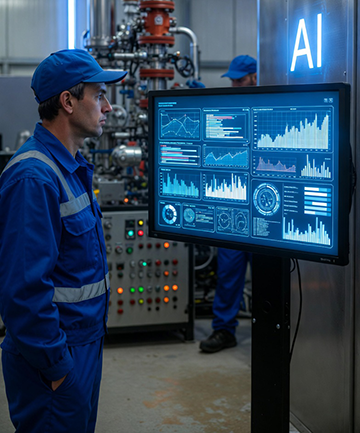 The conversation surrounding Artificial Intelligence (AI) in the industrial sector frequently centers on automation and efficiency gains. Less often discussed, but crucially important, is the human element, particularly the future of the maintenance workforce. Elevating the maintenance technician's skillset with AI captures a vital truth: AI, particularly when integrated into a Computerized Maintenance Management System (CMMS), serves as a powerful partner, elevating the skills and focus of every technician. This technology stands poised not to diminish the need for human expertise, but to magnify it, creating a more capable, engaged, and productive team.
The Technician of Tomorrow: A New Partnership with AI
The traditional image of a maintenance technician involves carrying bulky manuals and digging through disorganized paper trails. Today’s reality presents complex machinery, tighter schedules, and a demand for higher precision. This shift highlights a significant gap: the need for instant access to organized knowledge and support while working directly on equipment.
Technicians possess invaluable hands-on experience, but they struggle against time spent on non-wrench-turning tasks. AI addresses this challenge directly, fundamentally changing the technician's daily experience from reactive data retrieval to proactive problem-solving. This collaboration redefines the maintenance role, moving it toward a more technical and intellectually stimulating profession.
AI as the Ultimate Virtual Assistant for Troubleshooting
When a machine fails, time becomes the most expensive commodity. Diagnosing the issue demands a combination of immediate access to schematics, knowledge of past failures, and the technician's own expertise. An AI tool embedded within the CMMS drastically shrinks the time spent gathering information. Think of the AI as a highly specialized virtual assistant, always on and possessing instant recall of every system component and repair protocol.
Technicians input the error code or a description of the failure symptoms directly into the CMMS interface, often via a tablet or mobile device at the machine. The AI immediately processes this input against a massive database of machine specifications, sensor data (where available), and established best practices. It doesn't just return a list of possible solutions; it provides instant, ranked troubleshooting guidance.
For a junior technician, this guidance offers immediate on-the-job training, walking them through the diagnostic process with expert-level logic. For a veteran, it serves as a critical, unbiased second opinion, ensuring no potential cause gets overlooked during a high-pressure scenario. This capability acts as a persistent, high-value training platform, gradually transferring institutional knowledge to every member of the team.
The Power of Summarized Maintenance Histories
One of the most tedious and time-consuming tasks involves reviewing a machine's history before starting a repair. A technician needs to know: What repairs occurred previously? What parts got replaced? Who performed the work? And, most importantly, did the recurring issue suggest a deeper, unresolved problem? Sifting through dozens of past Work Orders (WOs), often containing verbose or inconsistent notes, demands significant effort.
The CMMS AI transforms this process. Instead of forcing the technician to read every note, the AI analyzes the entire maintenance history for that asset. It uses natural language processing (NLP) to extract and summarize the key data points instantly.
The resulting summary highlights crucial facts: The bearing failed four months ago due to lubrication issues; the motor experienced high vibration readings three weeks ago; the vendor replaced the coupling six months prior. This immediate, distilled context equips the technician with a complete picture before they lift a wrench. Knowing the historical context helps them shift from fixing the symptom to identifying the root cause, leading to more permanent, high-quality repairs and reducing repeat failures.
Accelerate your maintenance results
Pick the next step that fits you best: start your free trial or see MAPCON live with our team.
Moving Beyond Paperwork: Reclaiming Skilled Labor
The constant administrative burden represents a significant drain on a maintenance team's productive time. Completing WOs, logging time, detailing parts usage, and filing reports take technicians away from the hands-on repairs they perform best. This documentation task often generates frustration and contributes to burnout. The less time a skilled technician spends utilizing their technical abilities, the less value they provide the organization.
The AI CMMS helps relieve this burden by introducing smart, context-aware administrative tools. For example, as a technician progresses through a guided WO on a mobile device, the AI might pre-populate many fields based on location, time stamps, and the parts they request from inventory.
Future versions could have voice-to-text capabilities that allow the technician to dictate final repair notes, which the AI can then structure and standardize before submission, ensuring clarity and completeness without extensive typing. By automating or simplifying data entry, the AI system frees up hours of a technician’s time per week. These reclaimed hours get redirected back to skilled repairs, preventative inspections, or specialized training, dramatically boosting the team’s overall output and job satisfaction.
Building Trust and Acceptance Among the Workforce
Introducing AI into the maintenance shop requires careful consideration of the human element. Many workers fear that new technology poses a direct threat to their job security. Leadership must communicate clearly that the AI system acts as a force multiplier, not a replacement. The AI handles the data processing, the organization, and the tedious administrative work; the technician handles the dexterity, the critical judgment, and the complex problem-solving that no algorithm replicates.
Gaining workforce acceptance depends heavily on making the tools intuitive and genuinely helpful. If the CMMS AI makes the technician’s job easier and helps them achieve higher success rates, they adopt it quickly. Training should emphasize how the tool supports their existing skills and facilitates their growth into specialists capable of managing more advanced, complex machinery. This cooperative approach fosters an environment where maintenance personnel regard the technology as an essential partner in their daily operations.
The ROI of Upskilling: Beyond Simple Cost Savings
The return on investment (ROI) derived from AI in a CMMS extends far beyond simple cost reductions. The greatest value lies in the upskilling of the existing workforce. By having an AI assistant available 24/7, every technician effectively gains the institutional knowledge of the organization’s most experienced veterans. This democratizes expertise, shortening the skill gap between new hires and seasoned pros.
This investment in the team generates significant benefits:
- Higher First-Time Fix Rate: Technicians solve issues correctly the first time, thanks to better diagnostics and historical context.
- Improved Job Satisfaction: Workers spend more time on skilled work and less on paperwork, increasing engagement.
- Reduced Training Time: The AI acts as an active, on-the-job tutor, speeding up the proficiency of new team members.
- Better Retention: A skilled and respected workforce proves far less likely to seek opportunities elsewhere.
The collective impact transforms the maintenance department from a necessary cost center into a strategic asset. The workforce, equipped with AI tools, handles greater technical complexity and maintains higher asset reliability, directly contributing to overall operational excellence.
Maintenance software that delivers real value
MAPCON helps maintenance teams stay ahead of work orders, support better decisions, and reduce downtime.
The Next Evolution of Maintenance Expertise
The implementation of AI tools within a CMMS marks a significant turning point, one that recognizes the irreplaceable value of the human technician. Rather than seeing this technology as a threat, maintenance leaders need to recognize it as the ultimate set of tools for developing the next generation of highly skilled professionals. This partnership between human expertise and machine intelligence sets the stage for a new era where precision, knowledge, and efficiency define the work of every technician, guaranteeing that the skilled maintenance workforce not only survives but truly flourishes.
Frequently Asked Questions (FAQs)
How does AI specifically help maintenance technicians with troubleshooting?
AI acts as a virtual assistant, providing instant, ranked troubleshooting guidance by analyzing error codes and symptoms against an entire database of machine specifications and best practices.
Will AI integrated into a CMMS replace the need for skilled maintenance workers?
No, AI tools are designed to be force multipliers; they handle data processing and organization, allowing skilled technicians to focus on complex, hands-on repairs and critical judgment.
How does CMMS AI assist in reviewing a machine's repair history?
The AI uses natural language processing (NLP) to analyze all past work orders and instantly summarizes key repairs, parts replaced, and recurring issues, giving technicians full context before they begin work.
What is the primary benefit of using AI tools in a CMMS for day-to-day administrative tasks?
AI tools significantly reduce paperwork and data entry by automating fields and allowing voice-to-text dictation for notes, freeing up the technician's time for skilled wrench-turning tasks.
How do CMMS systems with integrated AI improve technician efficiency?
AI-powered CMMS features help technicians by summarizing asset histories and guiding diagnostics, ultimately leading to higher first-time fix rates.
Beyond troubleshooting, how does AI contribute to professional development for maintenance staff?
The AI system acts as a constant, on-the-job tutor by providing expert-level guidance, which helps to quickly close the skill gap between junior and veteran technicians.
MAPCON | 800-922-4336
Try Our CMMS Software Today!
MAPCON CMMS software empowers you to plan and execute PM tasks flawlessly, thanks to its wealth of features and customizable options. Want to see it for yourself? Click the button below to get your FREE 30-day trial of MAPCON!