



Published March 04, 2026
by Stephen Brayton
• Updated June 07, 2026
CMMS vs. EAM: Deconstructing the Core Differences in Maintenance Management Software
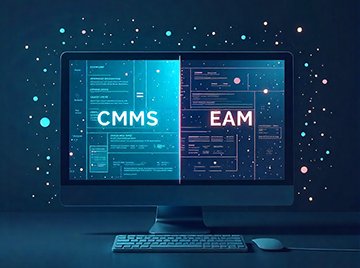 In the world of maintenance management, two software solutions stand out as essential tools: computerized maintenance management systems (CMMS) and enterprise asset management (EAM) systems. While both contribute to enhancing maintenance practices, significant differences exist between the two. This article deconstructs the core differences in these maintenance management software, providing a clear understanding of their respective strengths.
Scope and Focus - A Tale of Two Systems
A CMMS primarily concentrates on the day-to-day execution of maintenance operations. Its core functionalities include work order management, preventive maintenance scheduling, and asset tracking.
An EAM system, on the other hand, adopts a broader, enterprise-wide perspective. It extends beyond routine maintenance to encompass the entire asset lifecycle, including procurement, inventory management, and financial analysis.
It's important to note, however, that some CMMS solutions offer modules that address aspects of asset lifecycle management, such as depreciation tracking, purchasing, and inventory control. Furthermore, a CMMS can generate a wide range of financial and Key Performance Indicator (KPI) reports.
Asset Management - From Task-Oriented to Lifecycle-Centric
CMMS systems excel at managing maintenance-related activities. They focus on tasks like generating and tracking work orders, maintaining equipment history, and scheduling repairs.
EAM systems take a more holistic approach. They provide comprehensive asset management capabilities that span the entire asset lifecycle, from acquisition and depreciation tracking to eventual disposal planning. As previously mentioned, features like depreciation tracking and purchasing, traditionally associated with EAM, are increasingly available within certain CMMS offerings.
Financial Integration That Tracks Costs and ROI
EAM systems have robust financial integration capabilities. They enable organizations to meticulously track costs associated with asset maintenance, repair, and replacement, providing valuable insights into return on investment.
A well-designed CMMS can offer similar financial reporting features and the ability to integrate with existing financial systems. This will require collaboration with the CMMS vendor to establish the necessary connections. The reports generated by a CMMS reflect the data entered into the system. Many systems have flexible filtering options to extract precisely the information needed. Typical reports might include costs associated with assets and inventory, labor statistics, and work order performance.
Maintenance software that delivers real value
MAPCON helps maintenance teams stay ahead of work orders, support better decisions, and reduce downtime.
Maintenance Strategy – Moving From Reactive to Predictive
Much of the focus of CMMS systems centers on implementing and managing preventive maintenance programs. They provide the tools to schedule and track routine maintenance tasks effectively, minimizing downtime and extending asset lifespan.
EAM systems, while also supporting preventive maintenance, go a step further by facilitating condition-based and predictive maintenance strategies. This is achieved by integrating data from sensors and other monitoring devices, enabling proactive maintenance interventions. Some CMMS systems also have predictive maintenance capabilities, blurring the lines between the two systems.
Compliance and Regulatory Adherence to Meet Industry Standards
EAM systems often incorporate dedicated compliance management modules. These modules assist organizations in adhering to industry regulations, safety standards, and environmental guidelines, ensuring operational integrity.
While CMMS systems may offer basic compliance functionalities, they are generally not as comprehensive as those found in EAM systems. However, many companies successfully leverage records generated by a CMMS to satisfy auditors and regulatory bodies. Information supervisors can input specific data pertaining to specific asset regulations into the CMMS database.
Workforce Management That Goes Beyond Maintenance
CMMS systems typically provide basic workforce management capabilities, such as assigning work orders to technicians and tracking their availability.
EAM systems offer a more sophisticated suite of workforce management features, including skills management, certification tracking, and resource planning.
It's worth noting that some CMMS systems offer modules that will handle certain human resources functions, not only for the maintenance department but also for the wider organization, including employee information tracking and timecard processing.
Mobility and Accessibility – Taking Maintenance Off-Site
Modern CMMS and EAM systems recognize the importance of mobility. Both platforms offer mobile access through smartphones and tablets, empowering technicians and managers to access critical information and perform tasks from anywhere.
Scalability Means Adapting to Growth and Change
Traditionally, CMMS systems were often perceived as better suited for small to medium-sized businesses, while EAM systems were considered the domain of larger enterprises. However, CMMS providers can focus on scalability. This refers to the ability to tailor the system to specific needs.
Organizations can select and purchase only the modules and features they require, such as asset management, inventory control, and maintenance scheduling, without being forced to invest in unnecessary functionalities.
For instance, many companies enjoy the benefits of barcoding. If your company doesn't use that system, why should it show up in a package deal that includes modules you really want?
Another part of this point comes in the form of licensing. You have two choices: Individual or concurrent. An individual license connects to that specific individual. With concurrent, you buy a specific number of licenses and any authorized person can use them. This works well for companies with multiple shifts.
For example, let's say you have five concurrent licenses. That means five people can use them during the day and another five can use the system during the overnight shift.
Accelerate your maintenance results
Pick the next step that fits you best: start your free trial or see MAPCON live with our team.
Project Management for Handling Complex Projects
EAM systems frequently include project management modules to facilitate the planning and execution of large-scale maintenance projects, such as major equipment installations or facility expansions. While project management is often associated with EAM, some CMMS vendors also offer integrated project management capabilities.
Analytics and Reporting - Turning Data into Insights
EAM systems excel in providing advanced analytics and reporting tools. They enable organizations to generate comprehensive maintenance performance reports, conduct in-depth asset health analyses, and perform cost-benefit analyses.
CMMS systems can offer reports, as mentioned above, with enough parameters to set to hone the information. This includes the ability to analyze costs associated with inventory and assets, as well as generate custom reports based on specific criteria.
Supplier Management to Build Vendor Relationships
EAM systems typically include robust supplier management functionalities. They enable organizations to manage their relationships with suppliers and vendors, including tracking contracts, managing warranties, and evaluating supplier performance.
While many CMMS systems may not prioritize purchasing and vendor management to the same extent as EAM systems, some do offer features that address these areas. Similar to work orders, you can standardize purchase order forms and information.
While many CMMS systems may not prioritize purchasing and vendor management to the same extent as EAM systems, some do offer features that address these areas. There is a complete history of vendor purchasing activity focused on the maintenance department's spare parts and supplies. Similar to work orders, you can standardize purchase order forms and information.
Asset Hierarchy Offers Better Oversight
EAM systems often provide a hierarchical view of assets, allowing organizations to visualize the relationships between parent assets and their components. This feature helps you understand asset dependencies, efficiently manage spare parts, and better organize maintenance processes.
While CMMS systems may offer basic asset hierarchy functionality, it is usually not as comprehensive as the hierarchical views provided by EAM systems.
Energy Management to Drive Sustainability
EAM systems often have energy management capabilities. They track and optimize energy consumption of assets, providing insights into energy usage patterns, identifying inefficiencies, and supporting energy-saving initiatives.
CMMS systems typically do not offer dedicated energy management features.
Maintenance Maturity to Find the Right Fit
Neither EAM nor CMMS systems can create a maintenance strategy from scratch. Instead, they support and enhance existing maintenance plans. They work well for companies that struggle with challenges such as disorganized spreadsheets, excessive unplanned downtime, and an overwhelming backlog of work orders. Whether a company sits in the early stages of developing its maintenance program or has a mature program seeking further improvements, the right system can make a significant difference.
CMMS vs. EAM – How to Choose
As we have seen, CMMS and EAM systems have distinct characteristics and cater to different needs. While EAM systems generally offer a broader range of functionalities, particularly in areas like asset lifecycle management and financial integration, modern CMMS systems stay up to date with features that were once exclusive to EAM. The key to choosing the right system lies in a thorough understanding of your organization's specific requirements, budget constraints, and long-term goals.
Before making a decision, engage in open discussions with your team and management to clearly define your current maintenance strategy and identify areas for improvement. Conduct thorough research on available solutions, paying close attention to vendor offerings, customization options, and user reviews.
Don't hesitate to ask detailed questions and request demonstrations to ensure that the chosen system aligns perfectly with your organization's unique needs. Investing in the right maintenance management software can have a profound impact on your organization's efficiency, productivity, and bottom line.
FAQs
What is a CMMS and why is it important?
A CMMS helps organizations manage maintenance tasks efficiently, track assets, and schedule preventive maintenance.
How does MAPCON CMMS improve maintenance efficiency?
MAPCON CMMS streamlines work orders, tracks assets, and automates preventive maintenance, reducing downtime.
Can CMMS track asset lifecycles like an EAM?
Modern CMMS solutions include features like depreciation tracking and inventory control, covering parts of the asset lifecycle.
Can CMMS support mobile maintenance management?
Yes, many CMMS platforms allow technicians to access work orders, update tasks, and view asset information from mobile devices.
How do CMMS systems help with regulatory compliance?
CMMS can store records, track maintenance activities, and support audits to meet industry standards.
What factors should I consider when choosing CMMS software?
Consider your maintenance strategy, required features, scalability, and integration with existing systems.
MAPCON | 800-922-4336
Try Our CMMS Software Today!
MAPCON CMMS software empowers you to plan and execute PM tasks flawlessly, thanks to its wealth of features and customizable options. Want to see it for yourself? Click the button below to get your FREE 30-day trial of MAPCON!