




Published May 15, 2026
by Stephen Brayton
• Updated June 07, 2026
Mastering the Deming Cycle (PDCA): A Guide to Continuous Improvement in Industry
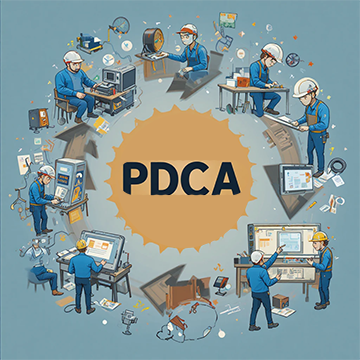 Understanding the Deming Cycle (PDCA) in Industry
The Deming Cycle, or PDCA (Plan, Do, Check, Act), has a successful history of aiding continuous improvement in industrial settings. It provides a structured, iterative approach to problem-solving and process enhancement. Unlike a one-time fix, PDCA encourages a culture of ongoing learning and adaptation. In this article, we'll help managers and supervisors to master the Deming Cycle.
As Edward Deming emphasized, simply copying successful practices from other industries didn't go far enough; a deep understanding of the underlying strategies is essential. This cycle particularly relates to industries that place value on efficiency, quality, and safety. And those cover a lot of industries.
The Critical First Step: Planning in Industrial Settings
In industrial environments, the "Plan" phase involves meticulous preparation. It requires a thorough analysis of existing processes, identification of potential improvements, and development of a detailed action plan.
Strategic Planning for Manufacturing Efficiency
In manufacturing, planning involves setting production targets, sourcing materials, and scheduling equipment maintenance. For instance, a car manufacturer might plan to reduce defects by implementing a new quality control system. This requires identifying the root causes of defects, selecting appropriate technologies, and training personnel. Resources like Richard Palmer's Maintenance Planning and Scheduling Handbook have given companies invaluable advice for planning maintenance strategies.
Agile Planning in Software Development
In software development, agile methodologies emphasize iterative planning and flexibility. Teams plan sprints, define user stories, and prioritize tasks based on customer feedback. This allows for rapid adaptation to changing requirements and market conditions.
Safety and Planning in Construction
Construction projects require detailed safety plans to mitigate risks. This includes hazard assessments, equipment inspections, and emergency protocols. Effective planning can prevent accidents and ensure compliance with safety regulations.
Action and Execution: The "Do" Phase in Industry
The "Do" phase consists of an individual or team implementing the planned action. This requires coordination, execution, and monitoring to follow and complete all instructions and guidelines.
Implementing Quality Control in Healthcare
In healthcare, the "Do" phase might involve implementing new clinical protocols or using advanced medical devices. This requires training healthcare professionals, monitoring patient outcomes, and ensuring adherence to quality standards.
Executing Production Plans in Manufacturing
In manufacturing, this phase involves operating machinery, assembling products, and conducting quality checks. It requires efficient resource allocation and adherence to production schedules.
Accelerate your maintenance results
Pick the next step that fits you best: start your free trial or see MAPCON live with our team.
Rigorous Evaluation: The "Check" Phase in Industrial Processes
The "Check" phase involves evaluating the outcomes of the "Do" phase. This requires data collection, analysis, and feedback to identify areas for improvement.
Data-Driven Evaluation in Manufacturing
Manufacturers use statistical process control (SPC) to monitor production processes and identify deviations from quality standards. This involves collecting data on key performance indicators (KPIs), analyzing trends, and identifying root causes of defects.
Feedback Loops in Software Development
Software development teams use code reviews, testing, and user feedback to evaluate the quality and functionality of their software. This allows for early detection of bugs and ensures that the software meets user requirements.
Analyzing Patient Outcomes in Healthcare
Healthcare providers use patient data, clinical trials, and medical research to evaluate the effectiveness of treatments and improve patient outcomes.
Implementation and Standardization: The "Act" Phase in Industry
The "Act" phase involves implementing changes based on the evaluation results. This includes standardizing successful practices, addressing identified issues, and continuously improving processes.
Standardizing Best Practices in Healthcare
Healthcare organizations use evidence-based guidelines and protocols to standardize clinical practices and ensure consistent quality of care. This involves training healthcare professionals, implementing electronic health records (EHRs), and conducting regular audits.
- Continuous Improvement in Construction: Construction companies use lessons learned from past projects to improve safety, efficiency, and quality. This involves updating safety protocols, investing in new technologies, and training workers.
- Refining Manufacturing Processes: After analyzing production data, manufacturers adjust machinery parameters, modify production workflows, or implement new quality control measures.
PDCA Across Diverse Industrial Sectors
The Deming Cycle's adaptability makes it a valuable tool across diverse industrial sectors. Whether enhancing manufacturing efficiency, improving software quality, ensuring patient safety, or streamlining construction projects, PDCA provides a systematic approach to continuous improvement. By embracing this cycle, industries can foster a culture of innovation, enhance operational excellence, and achieve sustainable growth.
The Deming Cycle's versatility allows for nuanced application across a spectrum of industries, each with unique challenges and objectives.
- Aerospace: In aerospace, PDCA helps ensure the highest levels of safety and reliability. For example, when developing a new aircraft component, engineers use PDCA to plan rigorous testing procedures, execute those tests, analyze the results for potential weaknesses, and then act by refining the design or manufacturing process.
- Pharmaceuticals: The pharmaceutical industry relies heavily on PDCA for drug development and manufacturing. Clinical trials, for instance, follow a PDCA-like structure: planning the trial protocol, conducting the trial, analyzing the data, and then acting on the findings by either proceeding with regulatory approval or adjusting the research. Manufacturing processes are also subject to continuous improvement through PDCA to ensure consistent quality and compliance with stringent regulations.
- Food and Beverage: PDCA helps maintain food safety and operational efficiency. For example, a food processing plant might use the four steps to improve sanitation procedures. They would plan new cleaning protocols, implement them, monitor bacterial counts and other quality metrics, and then act by adjusting the protocols based on the results.
- Logistics and Supply Chain: The logistics and supply chain industry uses PDCA to optimize delivery routes, reduce costs, and improve customer satisfaction. A company might use PDCA to improve its delivery efficiency. They would plan new route optimization software implementation, deploy it, analyze delivery times and fuel consumption, and then act by refining the software or adjusting delivery schedules.
- Energy Sector: Here, PDCA is used to improve the efficiency and sustainability of energy production and distribution. A solar power plant might use PDCA to optimize the angle and orientation of its solar panels. They would plan new tracking algorithms, implement them, monitor energy production, and then act by refining the algorithms based on the results.
- Automotive Industry: The automotive industry is a prime example of PDCA application, especially with the rise of electric vehicles and experiments in autonomous driving. Automotive manufacturers use PDCA in all aspects of their operations, from design and manufacturing to quality control and customer service. For instance, when developing a new electric vehicle, engineers use PDCA to test battery performance, analyze energy consumption, and refine the design for optimal range and efficiency.
- Education: Even the education sector benefits from PDCA. Schools and universities use PDCA to improve curriculum design, teaching methods, and student outcomes. For example, a school might use PDCA to improve its reading program. They would plan new teaching strategies, implement them, assess student progress, and then act by adjusting the strategies based on the results.
Accelerate your maintenance results
Pick the next step that fits you best: start your free trial or see MAPCON live with our team.
CMMS and the Deming Cycle: A Collaboration for Improvement
A computerized maintenance management system (CMMS) can assist with and help clarify each stage of the PDCA cycle, particularly within maintenance and asset-heavy industries.
- Plan:
- A CMMS stores historical maintenance data, including equipment performance, failure rates, and repair costs. This data allows for informed decision-making when planning maintenance activities.
- It can identify recurring issues, pinpoint areas for improvement, and help predict future maintenance needs.
- CMMS systems assist in the development of preventative maintenance schedules, ensuring that tasks are planned proactively.
- CMMS systems track inventory, labor availability, and equipment status, allowing for efficient resource allocation during planning.
- This helps to ensure that the necessary parts, tools, and personnel are available when needed.
- Do:
- CMMS software streamlines the execution of maintenance tasks by generating and tracking work orders.
- It provides technicians with detailed instructions, checklists, and access to relevant information, ensuring consistent and accurate execution.
- It also allows for the tracking of time and materials used during maintenance tasks.
- CMMS systems automate the scheduling and dispatching of preventive maintenance tasks, ensuring that they are performed on time.
- This helps to prevent equipment failures and extend asset lifespan.
- Check:
- A CMMS collects data on equipment performance, maintenance activities, and costs, providing valuable insights for evaluation.
- It generates reports and dashboards that allow managers to track key performance indicators (KPIs), such as mean time between failures (MTBF) and mean time to repair (MTTR).
- This data can be used to assess the effectiveness of maintenance strategies and identify areas for improvement.
- CMMS systems provide tools for analyzing maintenance data and generating reports on equipment performance, maintenance costs, and other relevant metrics.
- This data helps to identify trends, pinpoint root causes of problems, and evaluate the effectiveness of maintenance efforts.
- Act:
- Based on the insights gained from the "Check" phase, a CMMS can be used to implement changes to maintenance procedures, schedules, or resource allocation.
- It allows for the updating of preventative maintenance schedules, the modification of work order templates, and the adjustment of inventory levels.
- CMMS systems help to standardize maintenance procedures and best practices, ensuring consistency and quality across all maintenance activities.
- It allows for the storage and management of standard operating procedures (SOPs), checklists, and other documentation.
- By maintaining a constant cycle of data collection and analysis, the CMMS system becomes a central hub for the continuous improvement process.
In essence, a CMMS acts as a centralized repository for maintenance-related data, providing the information and tools needed to support each stage of the PDCA cycle.
The Deming Cycle: The Continuous Road to Industry Success
By consistently applying the Deming Cycle, industries can foster a culture of continuous improvement, drive innovation, and achieve sustainable growth. This iterative approach ensures that organizations remain adaptable and responsive to evolving market demands and technological advancements.
Using a CMMS in conjunction with the PDCA process gives maintenance departments better oversight over assets, inventory, and the reliability of machines and equipment.
FAQs
What is the Deming Cycle (PDCA) and why is it important?
The Deming Cycle is a four-step method for continuous improvement that helps organizations enhance processes, quality, and efficiency over time.
How does PDCA improve industrial operations?
PDCA creates a structured approach to planning, executing, evaluating, and refining processes, leading to better performance and fewer errors.
What role does a CMMS play in the PDCA cycle?
A CMMS supports each phase by organizing maintenance data, automating work orders, and providing insights for better decision-making.
How can MAPCON CMMS enhance maintenance planning?
MAPCON CMMS helps teams analyze historical data, schedule preventive maintenance, and allocate resources more effectively.
Why is the “Check” phase critical in PDCA?
The Check phase ensures that results are measured and analyzed, helping identify gaps and opportunities for improvement.
Can PDCA be used outside of manufacturing?
Yes, PDCA applies to many industries including healthcare, construction, software development, and logistics.
MAPCON | 800-922-4336
Try Our CMMS Software Today!
MAPCON CMMS software empowers you to plan and execute PM tasks flawlessly, thanks to its wealth of features and customizable options. Want to see it for yourself? Click the button below to get your FREE 30-day trial of MAPCON!