




Published May 11, 2026
by Stephen Brayton
• Updated June 07, 2026
Stopping the Invisible Drain: The Financial Audit of Lubrication Maintenance
Lubrication dictates the lifespan of every moving part within a facility.
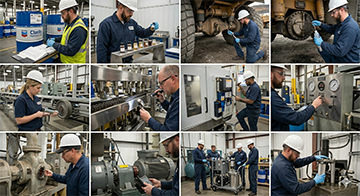 When teams treat grease and oil as an afterthought, they create a silent financial leak that drains the maintenance budget. This audit of 17 essential checks for lubrication preventive maintenance reveals where money escapes and how to secure those assets.
The High Price of Selection Errors
Effective maintenance begins with the chemistry of the lubricant itself. Using the wrong product creates immediate friction and heat, leading to accelerated component fatigue. Many facilities lose thousands of dollars annually by using a "one size fits all" grease across various bearing types.
A CMMS maintains the exact manufacturer specifications for every asset. Instead of relying on a technician's memory, the software displays the required lubricant type directly on the work order. This prevents the costly mistake of cross-contamination or using an incompatible base oil that could liquefy and run out of the housing.
Matching the lubricant to the specific operational environment saves more than just the machine; it saves the labor hours otherwise spent on premature repairs. High-speed spindles require different viscosity than heavy-load conveyors. When the computerized maintenance management system (CMMS) tracks these specific requirements, the facility avoids the "invisible drain" of incorrect application.
Safeguarding Your Liquid Assets
Lubricant integrity vanishes the moment contaminants enter the container. Storing oil in a humid, dusty corner of the shop allows moisture and particulates to degrade the additives before the fluid ever reaches a machine. This degradation forces the equipment to work harder, consuming more energy and wearing down surfaces.
Climate-controlled storage environments protect the chemical stability of expensive synthetic oils. A CMMS tracks the shelf life of these fluids, ensuring the oldest stock gets used first. This "First-In, First-Out" inventory management prevents the waste of expired products that no longer provide adequate protection.
Proper labeling and dedicated transfer containers eliminate the risk of mixing fluids. If a technician uses a bucket previously filled with coolant to transport gear oil, the resulting chemical reaction destroys the oil's lubricity. By utilizing a CMMS to manage inventory and storage locations, facilities maintain a clean chain of custody for every drop of fluid.
Accelerate your maintenance results
Pick the next step that fits you best: start your free trial or see MAPCON live with our team.
Mapping the Path to Reliability
A lubrication schedule serves as the heartbeat of a preventive maintenance program. Missing a single grease interval on a critical motor leads to a catastrophic failure that halts production. These unplanned outages cost significantly more than the price of the lubricant and the technician's time combined.
Operational factors like heat, load, and vibration change the frequency of required service. A static calendar often fails to account for these variables. A CMMS adjusts schedules based on actual runtime or meter readings. This ensures that a machine running 24/7 receives more frequent attention than a standby unit.
Identifying every lubrication point ensures that no hidden bearing goes dry. In complex machinery, technicians often overlook Zerk fittings located behind guards or in tight spaces. A CMMS provides digital maps and photos of every lubrication point, leaving no room for error or neglect during a PM cycle.
Precision in Quantity and Method
Both over-lubrication and under-lubrication damage equipment. Too much grease in a high-speed bearing causes churning, which generates excessive heat and leads to seal failure. Conversely, too little lubricant allows metal-on-metal contact, resulting in immediate scoring and eventual seizure.
Establishing the exact volume for every point prevents these extremes. A CMMS records the precise number of "shots" from a grease gun or the exact quart capacity for a reservoir. This level of detail removes the guesswork and ensures consistency across different shifts and technicians.
The method of application matters as much as the volume. Manual greasing requires a different set of skills than maintaining a centralized automated system. Use the CMMS to document the specific tools and procedures required for each task, ensuring that the team follows the most effective path to reliability.
Tool Readiness and Contamination Control
Worn-out grease guns and dirty oil cans introduce the very contaminants maintenance teams try to avoid. If a lubrication tool malfunctions, the technician might assume the bearing is full when it remains empty. Regular inspection of the tools themselves is a vital part of the 17-point check.
A CMMS manages the maintenance of the tools. By treating grease guns and filtration carts as assets, the system schedules their calibration and cleaning. This ensures that when a technician goes to perform a PM, the equipment functions perfectly and provides an accurate delivery of fluid.
Keeping dispensing areas clean prevents environmental debris from entering the system. Even a microscopic grain of sand acts like a cutting tool inside a precision bearing. Immediate spill cleanup and the use of desiccant breathers on reservoirs keep the "invisible drain" of contamination at bay.
Maintenance software that delivers real value
MAPCON helps maintenance teams stay ahead of work orders, support better decisions, and reduce downtime.
Advanced Monitoring and Frequency Optimization
Regular oil analysis acts as a blood test for machinery. It reveals internal wear patterns and the presence of water or fuel long before a failure occurs. This proactive approach allows teams to plan repairs during scheduled downtime rather than reacting to a sudden break.
A CMMS stores these analysis reports over the entire lifecycle of the asset. By comparing current data to historical trends, managers can extend lubrication intervals safely. This reduces both the cost of the lubricant and the labor required to apply it, without increasing the risk to the equipment.
Visual inspections supplement the data from analysis. Technicians look for leaks, unusual noises, or abnormal heat signatures during their rounds. Recording these findings in the CMMS creates a trail of evidence that helps engineers identify recurring issues and improve the overall maintenance strategy.
Environmental Responsibility and System Purity
Filter replacement keeps the lubrication system clean. A clogged filter allows dirty oil to bypass the media, circulating wear particles throughout the machine. Following a strict replacement schedule based on pressure differentials or time intervals protects the most sensitive components.
The CMMS helps managers schedule filter changes based on the manufacturer's recommendations or observed conditions. It also ensures that the correct replacement parts remain in stock. This prevents the common problem of "stretching" a filter's life because a new one isn't available in the warehouse.
Proper disposal of used fluids protects the facility from environmental fines and liability. Tracking the volume of waste oil through a CMMS provides the necessary documentation for regulatory compliance. It shows a commitment to responsible management and helps the facility avoid the high costs of environmental mismanagement.
Training for Accountability
The best tools and lubricants fail without a trained workforce. Technicians must understand the "why" behind every check in the list. Education on the chemistry of friction and the mechanics of wear empowers the team to take ownership of the equipment's health.
A CMMS tracks the training certifications of every employee. It ensures that only qualified personnel perform complex lubrication tasks on critical assets. This layer of accountability reduces the likelihood of human error and ensures a higher standard of work across the board.
Continuous improvement requires a constant feedback loop. As technology evolves and machinery changes, lubrication procedures must adapt. Regularly reviewing these processes within the CMMS allows the maintenance department to refine its approach and stay ahead of the "invisible drain" of obsolescence.
Building the Future of Asset Protection
Managing 17 different checks across hundreds or thousands of assets is impossible with paper or spreadsheets. The complexity of modern industrial environments demands a centralized digital platform. A CMMS provides the structure necessary to transform a chaotic lubrication routine into a precise, data-driven program.
By integrating every aspect of the lubrication process—from inventory and scheduling to analysis and training—the software provides a clear view of the facility's health. This visibility allows managers to make informed decisions that extend asset life and reduce operational costs. The investment in a CMMS pays for itself by stopping the silent leaks that threaten the bottom line.
Beyond the Checklist: A Culture of Reliability
Improving maintenance outcomes requires more than just following a list; it requires a shift in how the organization views lubrication. When every employee recognizes the financial impact of a dry bearing or a contaminated oil drum, the facility moves closer to true operational excellence. This cultural shift, supported by the right technology and rigorous standards, ensures that the machinery remains productive and the budget remains secure for years to come.
Frequently Asked Questions
How does a CMMS prevent over-lubrication?
The software records the exact volume required for each bearing and alerts technicians to specific quantities during the work order process.
What is the financial impact of poor lubricant storage?
Contaminated storage leads to premature fluid degradation, which causes increased equipment wear and unnecessary replacement costs.
Can MAPCON help with oil analysis tracking?
Yes, the system allows users to attach lab results and historical data directly to the asset for long-term trend monitoring.
Why should I use a CMMS for inventory management of oils?
A CMMS ensures that lubricants are always in stock and tracks shelf life to prevent the use of expired or degraded products.
How does mobile technology improve lubrication tasks?
Mobile applications from MAPCON allow technicians to view lubrication point maps and checklists directly at the machine.
What is the benefit of frequency optimization in maintenance?
It allows a facility to reduce labor and lubricant waste by servicing machines based on actual usage rather than just the calendar.
MAPCON | 800-922-4336
Try Our CMMS Software Today!
MAPCON CMMS software empowers you to plan and execute PM tasks flawlessly, thanks to its wealth of features and customizable options. Want to see it for yourself? Click the button below to get your FREE 30-day trial of MAPCON!