




Published April 20, 2026
by Stephen Brayton
• Updated June 07, 2026
Maximizing Industrial Thermal Exchange: A Guide to Cooling Tower Care
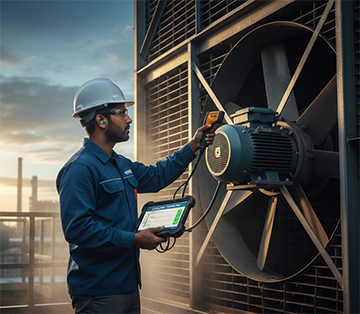 Industrial facilities rely on cooling towers to shed massive heat loads generated by manufacturing processes and large-scale HVAC systems.
This article, Maximizing Industrial Thermal Exchange: A Guide to Cooling Tower Care, explores the critical intersection of mechanical upkeep and water chemistry. Efficient cooling tower operation prevents system downtime and reduces the significant costs associated with energy waste.
The Mechanics of Thermal Rejection
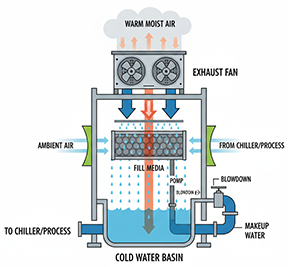
Cooling towers serve as specialized heat exchangers where air and water interact to lower the temperature of the circulating fluid. In a direct or "open" system, the process relies on the physics of evaporation. The system sprays heated water over a fill material, increasing the surface area for contact with the ambient air. As fans pull air through this spray, a small portion of the water evaporates, carrying away the latent heat. The remaining cooled water collects in a basin at the bottom for reuse in the chiller or industrial process.
Indirect or "closed" systems operate differently by isolating the process fluid within a coil. This fluid never makes direct contact with the outside air, which prevents contamination of the internal loop. A secondary water system sprays over the exterior of these coils while fans drive air across them to extract heat. Whether a facility uses propeller fans for high-flow capacity or squirrel-cage centrifugal fans for quieter, high-pressure applications, the mechanical integrity of these components dictates the success of the entire thermal cycle.
Integrating CMMS for Structured Maintenance
Managing the myriad tasks required for these systems often overwhelms traditional paper-based logs. A Computerized Maintenance Management System (CMMS) acts as a digital nerve center for every maintenance action. By housing the entire cooling tower asset history in one location, a CMMS allows managers to schedule recurring inspections and repairs with precision. It replaces guesswork with data-driven scheduling, ensuring that no technician misses a critical lubrication point or water test.
When a facility implements a CMMS, the software generates automated work orders based on time intervals or usage meters. For example, in a large food processing plant, the cooling tower might require more frequent cleaning due to organic particulates in the air. The CMMS tracks these specific environmental factors and adjusts the maintenance cadence accordingly. This digital approach creates a clear audit trail, which is vital for regulatory compliance regarding health and safety.
The Critical Importance of Water Quality
Maintaining clean circulating water represents the most vital aspect of cooling tower health. Stagnant or contaminated water serves as a breeding ground for biological growth, including algae and dangerous pathogens like Legionella. Biofilms not only pose a health risk to the surrounding community but also create an insulating layer on heat exchange surfaces. This "bio-fouling" forces the system to work harder, consuming more electricity to achieve the same cooling effect.
Technicians must also manage "blowdown" losses. As water evaporates, the dissolved solids—like calcium and magnesium—remain behind, becoming increasingly concentrated. If these concentrations rise too high, they form scale on the tower fill and internal piping. To combat this, systems "bleed" or "blow down" a portion of the concentrated water and replace it with fresh makeup water. A CMMS helps monitor these cycles of concentration, allowing teams to balance water conservation with the need to prevent scale.
Maintenance software that delivers real value
MAPCON helps maintenance teams stay ahead of work orders, support better decisions, and reduce downtime.
Daily and Weekly Inspection Protocols
Preventive maintenance begins with daily visual assessments. Operators should walk the perimeter to check for unusual noises, leaks, or debris around the air intakes. These quick checks ensure that the sequencing of multiple towers matches the current building load. During these rounds, verifying proper water flow across the distribution basin prevents "dry spots" on the fill, which significantly degrades thermal performance.
Weekly tasks require a deeper dive into the mechanical drive train. Technicians should inspect suction screens for blockages that could starve the pumps of water. Belts and pulleys require tension adjustments to prevent slippage and premature wear. Water quality testing must occur at least weekly to confirm that chemical treatment levels remain within the target range for pH, conductivity, and biocide concentration.
Utilizing Sensor Technology
Modern maintenance departments increasingly rely on vibration and temperature sensors to augment their weekly rounds. When mounted on fan motors and gearboxes, these sensors provide 24/7 monitoring of the equipment’s "heartbeat." If a bearing begins to fail, it generates a specific vibration signature long before a human ear can detect it. Regularly recording sensor, meter, and gauge readings in a CMMS allows managers to create high-priority work orders the moment a reading exceeds the safe threshold.
Monthly and Annual Deep Cleaning
Monthly maintenance focuses on the longevity of moving parts. This includes lubricating motor bearings and checking the alignment of the fan shaft. Misalignment causes parasitic power loss and puts undue stress on the couplings. Technicians also use this time to inspect the tower structure for signs of corrosion or "white rust" on galvanized steel components.
Once a year, the cooling tower requires a comprehensive shutdown and deep clean. This annual event involves draining the basin to remove accumulated silt and sludge. Technicians must inspect the "fill"—the honeycomb-like material inside the tower—for any sagging or clogging. If the fill is damaged, the air cannot flow properly, and the heat exchange rate plummets.
| Maintenance Frequency | Task Description | CMMS Benefit |
|---|---|---|
| Daily | Visual inspection and flow check | Ensures immediate response to leaks |
| Weekly | Belt tension and water chemistry | Tracks chemical usage trends |
| Monthly | Lubrication and alignment | Prevents mechanical "drag" and wear |
| Annual | Basin cleaning and bearing inspection | Records long-term asset health |
Enhancing Energy Efficiency Through Diligence
Every millimeter of scale or biofilm on a heat exchanger surface increases energy consumption. In a refinery or a large data center, even a 5% drop in cooling tower efficiency translates to thousands of dollars in wasted power every month. Regular maintenance ensures the approach temperature—the difference between the cooled water temperature and the ambient wet-bulb temperature—remains as tight as possible.
A CMMS provides the analytical tools to see these trends over time. If the data shows that a specific tower requires more frequent blowdowns or has rising motor temperatures, management can investigate the root cause. Perhaps the fan pitch needs adjustment, or the water treatment program requires a different chemical blend. Without the centralized data of a CMMS, these subtle inefficiencies often go unnoticed until a total system failure occurs.
Accelerate your maintenance results
Pick the next step that fits you best: start your free trial or see MAPCON live with our team.
 Beyond the Cooling Tower: A Holistic View
While the cooling tower is a primary focus, it exists as part of a larger ecosystem. Effective maintenance programs apply these same rigorous standards to other critical infrastructure. The following components also require structured preventive maintenance to ensure the entire facility remains operational:
- Air Handlers: Regular filter changes and coil cleaning.
- Chillers: Monitoring refrigerant pressures and tube integrity.
- Pumps: Checking seals and impellers to maintain flow rates.
- Steam Boilers: Managing feed water quality to prevent internal corrosion.
- Motors: Testing insulation resistance to predict electrical failure.
Future-Proofing Thermal Management Systems
As industrial standards evolve, the move toward "smart" maintenance becomes mandatory rather than optional. The integration of IoT (Internet of Things) devices with cloud-based CMMS platforms allows for a level of precision that was previously impossible. Facilities that embrace these tools find themselves with fewer emergency repairs and a much longer lifespan for their expensive capital equipment.
Modern Maintenance Evolution
The landscape of industrial upkeep continues to shift toward data-centric models that prioritize long-term asset health over short-term fixes. Adopting a digital framework for tracking mechanical tasks ensures that complex systems remain reliable under heavy loads. This transition reflects a broader commitment to operational excellence and environmental responsibility in the modern industrial sector.
FAQs
How often should cooling tower water be tested?
Water quality testing should occur at least weekly to monitor pH, conductivity, and biocide levels to prevent scale and biological growth. Using a CMMS from MAPCON allows technicians to log these results instantly and track chemical trends over time.
What are the primary benefits of using a CMMS for cooling tower maintenance?
A CMMS centralizes scheduling for inspections, automates work orders for mechanical repairs, and maintains a detailed digital history of asset performance. This organized approach reduces unexpected downtime and ensures no critical safety checks are missed.
How does scale buildup affect cooling tower efficiency?
Scale acts as an insulator on heat exchange surfaces, forcing the system to consume more energy to achieve necessary cooling temperatures. Systems like MAPCON help manage blowdown schedules to keep mineral concentrations within safe limits.
What is the difference between open and closed circuit cooling towers?
Open towers use direct evaporation by spraying water into an air stream, while closed systems keep the process fluid isolated within a sealed coil. Both designs require regular fan and motor maintenance to ensure effective heat rejection.
Why is "blowdown" necessary in cooling tower operations?
Blowdown removes highly concentrated, mineral-rich water from the system to prevent scale formation on the internal fill. A CMMS helps operators calculate the ideal cycles of concentration to balance water conservation with mechanical protection.
How does a CMMS assist with annual cooling tower cleaning?
The software triggers automated reminders for deep-cleaning tasks like basin scrubbing and fill inspection that only occur once a year. By using MAPCON, managers ensure that these infrequent but vital tasks do not get overlooked during busy seasons.
MAPCON | 800-922-4336
Try Our CMMS Software Today!
MAPCON CMMS software empowers you to plan and execute PM tasks flawlessly, thanks to its wealth of features and customizable options. Want to see it for yourself? Click the button below to get your FREE 30-day trial of MAPCON!