




Published March 16, 2026
by Stephen Brayton
• Updated June 07, 2026
Visual Intelligence in Maintenance: AI-Driven Asset Inspection
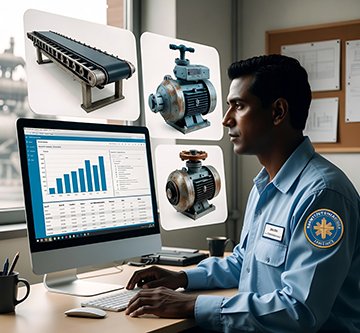 The concept behind Computer Vision and AI in asset inspection and condition monitoring reflects a growing shift toward visual intelligence in maintenance programs. Organizations already collect thousands of inspection photos and videos, yet many of those files remain underused. AI-driven image analysis now converts visual data into structured maintenance insights. This change reshapes how inspection evidence supports decisions inside the computerized maintenance management system (CMMS).
How Computer Vision Interprets Inspection Images
Computer vision refers to AI systems trained to recognize patterns, objects, and anomalies within images or video. In asset inspection, these systems review technician-submitted photos, drone footage, or fixed camera feeds and compare visual elements against known conditions.
Instead of relying on human interpretation alone, the AI scans for specific features such as surface texture changes, discoloration, shape deformation, or fluid presence. Each image passes through classification models trained on thousands of labeled examples. These models flag visible wear indicators without requiring manual review of every photo.
Lighting variations, angle differences, and background clutter often challenge traditional inspections. Modern vision models compensate through preprocessing techniques that normalize contrast and isolate the asset from surrounding noise. As a result, inspection images gain consistency regardless of capture conditions.
Detecting Early Visual Signs of Wear
Visible degradation often appears long before functional failure. Rust blooms, hairline cracks, oil stains, insulation damage, and seal deterioration leave visual clues that AI detects with speed and consistency.
Rust and Corrosion Identification
In manufacturing plants and processing facilities, corrosion frequently develops on piping, tanks, and structural supports. Computer vision models identify rust through color segmentation and texture analysis. Subtle oxidation patterns that escape the human eye still register in pixel-level analysis.
Oil and gas operators use this approach on offshore platforms and refineries. Technicians capture photos during walkdowns, and the AI flags corrosion severity levels. Each finding receives a standardized rating instead of subjective descriptions.
Accelerate your maintenance results
Pick the next step that fits you best: start your free trial or see MAPCON live with our team.
Crack Detection in Structural Assets
Cracks present a major risk across industries such as transportation, utilities, and heavy manufacturing. Vision models trained on concrete, steel, and composite materials identify fracture lines based on shape irregularities and edge detection.
Rail operators apply this technology to bridge inspections. Fixed cameras and mobile inspection vehicles collect images, while AI highlights potential crack growth areas. Maintenance teams receive visual annotations rather than raw images alone.
Leak and Fluid Presence Recognition
Leaks often reveal themselves through staining, pooling, or reflective surfaces. AI systems detect these visual markers even when fluid volume remains small.
In food processing plants, camera-based inspections monitor valve assemblies and pump housings to ensure optimal performance. When AI detects moisture patterns inconsistent with normal washdown residue, the system generates a condition alert tied to the asset record.
From Image Capture to Condition Report
Visual inspection data only adds value when converted into actionable records. Computer vision platforms bridge that gap by generating condition reports.
Image Ingestion and Analysis
Inspection images enter the system through multiple channels. Technicians upload photos via mobile CMMS apps. Fixed cameras stream periodic snapshots. Drones contribute aerial footage for large or remote assets.
Once ingested, the AI assigns metadata such as asset ID, inspection date, location, and detected condition type. Confidence scores accompany each finding, allowing maintenance teams to prioritize follow-up actions.
Maintenance software that delivers real value
MAPCON helps maintenance teams stay ahead of work orders, support better decisions, and reduce downtime.
Automated Condition Scoring
Rather than vague notes, AI assigns condition scores based on predefined criteria. Corrosion might receive a severity rating from minor surface oxidation to advanced material loss. Cracks gain measurements based on length and width estimation.
These standardized scores support consistency across shifts, sites, and inspectors. Maintenance planners rely on comparable data instead of subjective narratives.
Visual Annotations for Clarity
AI overlays bounding boxes, heat maps, or arrows directly on inspection images. These visual cues highlight the exact area of concern. Technicians reviewing the report immediately understand the issue without guessing.
Annotated images reduce back-and-forth communication between inspectors and planners. Each report tells a clear visual story tied to measurable condition data.
Logging AI Findings Directly into the CMMS
The real transformation occurs when AI-generated insights connect directly with the CMMS.
Each detected issue attaches to the correct asset record. The CMMS receives condition scores, annotated images, and timestamps automatically. This process preserves inspection history in a structured format.
Over time, the asset record evolves into a visual timeline. Maintenance teams review how conditions changed across inspections without sorting through unorganized photo libraries.
Work Order Recommendations
When AI detects conditions beyond acceptable thresholds, the CMMS triggers recommended actions. These actions may include inspections, repairs, or part replacements.
For example, utilities monitoring substation equipment use AI to flag insulation damage on transformers. The CMMS generates a corrective work request linked to the image evidence, reducing manual data entry.
Audit and Compliance Support
Regulated industries benefit from documented visual proof. AI-generated reports support audits by showing inspection evidence paired with standardized condition ratings.
Facilities managers in healthcare and pharmaceuticals use this capability to demonstrate routine equipment monitoring. Each logged image confirms compliance with inspection protocols.
Industry Examples of AI-Driven Visual Inspection
Manufacturing and Industrial Plants
Manufacturers often manage thousands of rotating and static assets. Visual inspections support lubrication checks, alignment reviews, and structural assessments.
AI helps maintenance teams handle volume. Instead of reviewing every photo manually, teams focus on AI-flagged issues. This shift increases inspection coverage without adding headcount.
Energy and Utilities
Power generation and distribution assets span wide geographic areas. Fixed cameras and drones capture images of transmission towers, substations, and pipelines.
Computer vision systems scan these images for corrosion, vegetation encroachment, and physical damage. Logged findings feed directly into the utility’s CMMS, maintaining traceability across remote sites.
Transportation and Infrastructure
Roads, bridges, and rail systems depend heavily on visual condition assessment. AI-assisted inspections reduce reliance on subjective judgment.
Transportation agencies deploy mobile imaging platforms that feed photos into vision models. The CMMS stores condition scores alongside maintenance history, supporting capital planning discussions without complex manual reporting.
Commercial Facilities Management
Large facilities generate daily inspection images related to HVAC equipment, roofing, and safety systems. AI helps facilities teams manage consistency across contractors and internal staff.
Condition reports arrive pre-formatted, tagged, and stored. The CMMS gains cleaner data without placing additional documentation burdens on technicians.
Enhancing CMMS Reporting Through Visual AI
CMMS platforms traditionally rely on text entries and numeric fields. Visual AI adds a new data layer that improves reporting clarity.
Visual Context in Maintenance Dashboards
Dashboards that include annotated inspection images offer faster understanding. Maintenance leaders see not just condition scores but the visual evidence behind them.
This context improves communication with operations, safety teams, and leadership. Decisions rely on shared visual references rather than abstract metrics alone.
Standardized Reporting Across Sites
AI enforces consistent interpretation of visual wear. Reports from different facilities follow the same scoring logic. Organizations operating multiple sites benefit from comparable condition data. Capital planning discussions gain clarity when each asset follows the same visual evaluation rules.
Reduced Administrative Burden
Manual photo review and report writing consume time. AI reduces that load by converting images into structured data automatically. Technicians focus on inspections rather than documentation. Planners spend less time interpreting notes and more time scheduling effective maintenance actions.
AI and Condition Monitoring Without Overpromising
While AI supports forward-looking maintenance strategies in general terms, its immediate value lies in better inspection data. Visual AI strengthens condition monitoring by improving detection accuracy and record quality.
Rather than predicting outcomes, these systems focus on what appears in front of the camera. That grounded approach builds trust in the data feeding the CMMS.
As image libraries grow, AI models refine detection accuracy. Maintenance teams gain confidence in inspection findings without relying solely on subjective human judgment.
Implementation Considerations for Visual AI
Successful deployment requires thoughtful integration.
- Image quality standards matter. Clear capture guidelines improve detection accuracy.
- Asset tagging accuracy ensures findings attach to the correct CMMS records.
- Change management supports technician adoption. When teams understand that AI supports inspection quality rather than replacing expertise, engagement improves.
- Security and data governance also play a role, especially in regulated industries handling sensitive imagery.
AI-Driven Visual Inspection as a Maintenance Multiplier
The Future of Computer Vision in CMMS-Connected Inspections
Computer vision and AI reshape how inspection images contribute to maintenance intelligence. Visual data no longer sits idle in storage folders. Instead, it feeds condition reports, supports compliance, and enriches CMMS records with clarity and consistency.
As organizations continue collecting inspection images at scale, visual AI turns that growing volume into usable insight. The result centers on better-informed maintenance decisions built on what assets visibly reveal each day.
FAQs
What is computer vision in asset inspection?
Computer vision uses AI to analyze inspection photos or videos and identify visible issues such as rust, cracks, or leaks without manual review.
How does AI use technician-submitted photos for condition monitoring?
AI reviews uploaded images, detects signs of wear, assigns condition ratings, and attaches the findings to the related asset record.
How does computer vision improve CMMS inspection reports?
It converts visual findings into standardized condition data and annotated images that are automatically logged in the CMMS.
What types of assets benefit most from AI-based visual inspection?
Industrial equipment, infrastructure, energy assets, and facility systems benefit most due to frequent visual wear indicators.
Does AI replace manual inspections in maintenance programs?
No, it supports inspections by improving consistency, speed, and documentation quality while technicians remain responsible for field work.
What visual issues can AI detect during routine inspections?
AI commonly detects corrosion, surface cracks, fluid leaks, insulation damage, and structural deformities.
MAPCON | 800-922-4336
Try Our CMMS Software Today!
MAPCON CMMS software empowers you to plan and execute PM tasks flawlessly, thanks to its wealth of features and customizable options. Want to see it for yourself? Click the button below to get your FREE 30-day trial of MAPCON!